Livraison au Canada
Économisez jusqu'à 50 %

Livraison aux États-Unis
Économisez jusqu'à 75 %

Livraison à l'international
Économisez jusqu'à 85 %

Livraison le jour même
Dans toute la région du Grand Toronto

Retours
Le tarif le plus bas du marché
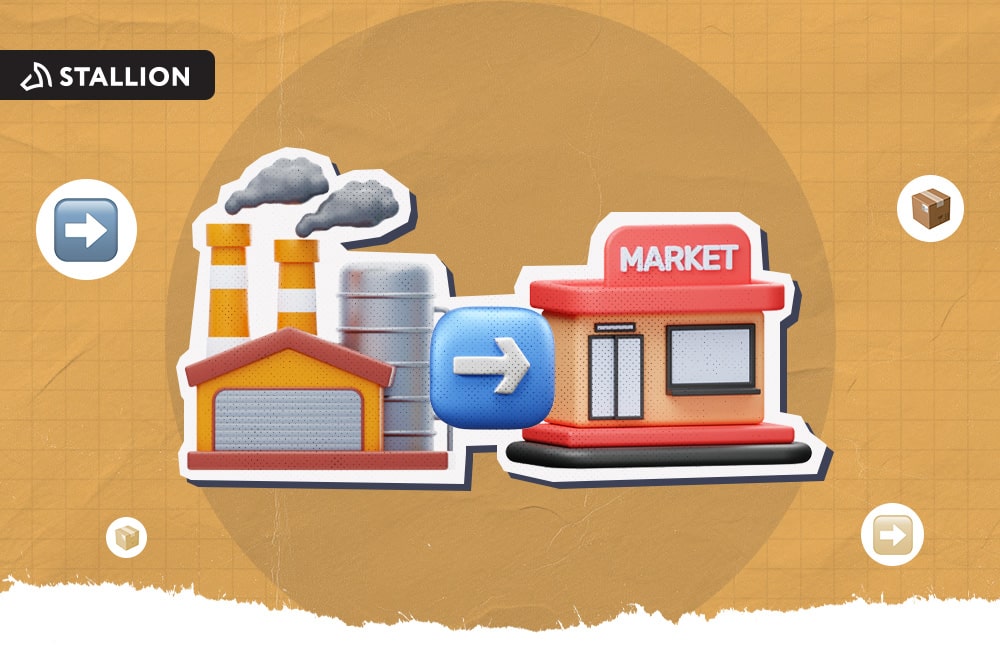
Lorsque votre entreprise gère toutes les étapes de son processus d'expédition, du stockage à la livraison, vous utilisez un modèle 1PL. Mais qu'est-ce que le 1PL exactement ? Voyons ce que cela signifie, qui y a recours et comment il se compare aux autres modèles logistiques.
La logistique en propre (1PL) est un modèle logistique dans lequel l'entreprise gère en interne toutes les étapes de la chaîne d'approvisionnement.
En bref, vous :
Aucun transporteur externe ni prestataire tiers n'intervient.
Par exemple :
Vous êtes propriétaire d'une boutique de jouets en ligne. Cependant, au lieu de confier la livraison des articles à des entreprises spécialisées, vous vous en chargez vous-même. Vous livrez les commandes aux clients avec votre propre véhicule. Ce système s'inscrit dans le cadre d'un modèle 1PL.
Voici quelques-uns des secteurs qui ont recours au modèle 1PL :
Cette configuration convient particulièrement aux entreprises qui expédient de faibles volumes ou qui souhaitent exercer un contrôle direct sur leurs opérations.

Gérer la logistique en interne peut être valorisant, mais cela comporte aussi son lot de défis. Voyons cela de plus près :
Même si elle comporte des défis, la logistique 1PL peut fonctionner efficacement si l'on met en place les bonnes stratégies. Voici comment optimiser vos opérations :
Documenter les procédures étape par étape pour la réception, le stockage, l'emballage et l'expédition. Une procédure opérationnelle standard (SOP) clairement définie garantit que tout le monde suit le même processus. Cela permet ainsi de réduire la confusion et les erreurs humaines.
La normalisation facilite également la formation des nouveaux employés et permet de maintenir une qualité de service constante.
Mettez en place des systèmes de lecture de codes-barres ou de RFID pour une gestion efficace des stocks. Cela vous permettra d'éviter la surstockage, de réduire les ruptures de stock et d'améliorer la précision des commandes. De plus, organisez l'agencement de l'entrepôt de manière stratégique.
Placez clairement les articles à rotation rapide à proximité des postes d'emballage et des zones d'étiquetage. Cela permet d'accélérer et de rendre plus efficaces les opérations de préparation et d'emballage.
Utilisez un logiciel de logistique pour automatiser et rationaliser les opérations quotidiennes, telles que :
Ces plateformes permettent de réduire les erreurs humaines, de diminuer les coûts et de raccourcir les délais de livraison. Leur intégration à votre système de commerce électronique ou de gestion des commandes permet un suivi continu des commandes, de l'achat à la livraison.
Utilisez des boîtes de dimensions standardisées et des matériaux écologiques afin de réduire au minimum les déchets et les frais d'expédition. Cette stratégie vous permet également de vous aligner sur les objectifs de développement durable et de séduire les clients soucieux de l'environnement. Un emballage adapté minimise également les dommages subis par les produits pendant le transport, ce qui réduit les retours et les réclamations des clients. Si vous avez besoin de conseils, optez de préférence pour des boîtes recyclables et des matériaux de calage biodégradables.
Veillez à ce que l'ensemble du personnel maîtrise les différentes tâches logistiques, afin d'assurer le bon déroulement des opérations même en l'absence de certains membres de l'équipe. Vous devez tenir tout le monde informé des meilleures pratiques en matière de logistique, des protocoles de sécurité et des nouvelles technologies.
Oui, cela peut sembler coûteux au premier abord. Cependant, cette flexibilité permet d'assurer le bon déroulement des opérations, notamment pendant les périodes de forte affluence ou en cas d'absences imprévues.
Vous pouvez commencer par suivre certains indicateurs clés de performance (KPI), tels que :
Satisfaction client
L'analyse régulière de ces indicateurs vous aide à détecter rapidement les goulots d'étranglement. Par exemple, une augmentation soudaine des retards de livraison peut indiquer qu'il est nécessaire de revoir les processus internes.
Considérez la logistique comme un processus en constante évolution plutôt que comme une configuration ponctuelle.
Vous pouvez également encourager votre équipe à proposer des améliorations des processus et à rester ouverte aux nouveaux outils ou technologies susceptibles d'améliorer l'efficacité, la précision et la satisfaction client.

On confond facilement le modèle 1PL avec d'autres modèles logistiques, car ils concernent tous l'expédition et la gestion des commandes. Pour y voir plus clair, voici une comparaison entre le modèle 1PL et les modèles 2PL, 3PL, 4PL et 5PL.
| Modèle logistique | Qui s'en charge ? | Ce que cela couvre | Idéal pour |
| 1PL | L'entreprise elle-même | Gère en interne l'ensemble des opérations d'expédition, de stockage et de livraison | Les petites entreprises qui effectuent des livraisons locales ou dont les volumes d'expédition sont faibles |
| 2PL (logistique de deuxième partie) | Transporteurs externes | Transport uniquement ; l'entreprise continue de gérer l'entreposage | Les entreprises qui ont besoin d'un soutien supplémentaire pour leurs livraisons tout en souhaitant garder le contrôle |
| 3PL (logistique externalisée) | Fournisseur tiers | Expédition, gestion des commandes et, parfois, entreposage | Les marques de commerce électronique et les entreprises en pleine croissance à la recherche d'efficacité |
| 4PL (logistique de quatrième partie) | Un intégrateur logistique | Supervise et gère plusieurs prestataires logistiques (3PL) afin d'assurer la coordination globale de la chaîne d'approvisionnement | Entreprises ayant besoin d'une gestion logistique centralisée |
| 5PL (logistique de cinquième partie) | Entreprise de logistique axée sur la technologie | Se concentre sur la planification stratégique, l'automatisation et les réseaux numériques | Les grandes entreprises optimisent leur logistique mondiale grâce aux technologies |
En d'autres termes :
À lire également : 3PL ou 4PL : comment faire le bon choix

Le choix entre les modèles 1PL, 2PL, 3PL et 4PL dépend de la taille de l'entreprise, du volume d'expédition et des ressources disponibles. Comme indiqué plus haut, chaque modèle offre un équilibre différent entre contrôle, coût et commodité. Il est donc essentiel d'évaluer les solutions logistiques dont vous avez réellement besoin.
Avant de décider de passer d'un modèle 1PL à un véritable prestataire logistique, tenez compte des facteurs suivants :
Vos réponses à ces questions vous aideront à déterminer le type de service logistique le plus adapté à vos besoins, ce qui vous permettra de choisir plus facilement celui qui vous convient.
La logistique en régie propre (1PL) peut constituer un excellent point de départ pour les entreprises qui souhaitent garder un contrôle total sur leurs opérations. Cependant, à mesure que le volume de commandes augmente, la gestion interne des besoins logistiques peut limiter la scalabilité et l'efficacité. Un partenariat avec un prestataire de services logistiques tiers (3PL) de confiance peut vous aider à répondre à vos besoins logistiques.
Vous vous sentez dépassé par la gestion de l'ensemble du processus logistique ? Il est peut-être temps de faire appel à un prestataire logistique externe comme Stallion.
Avec Stallion, vous bénéficiez d'un service d'expédition plus rapide, plus fiable et plus économique, idéal pour les entreprises canadiennes.
De l'entreposage à la livraison du dernier kilomètre, Stallion simplifie l'ensemble de votre chaîne logistique pour que vous puissiez vous concentrer sur l'essentiel. Développez votre marque et offrez une expérience client exceptionnelle.

Candy Rada est une professionnelle dévouée qui possède une vaste expérience dans la rédaction de contenu pour le secteur du transport maritime. Titulaire d'un diplôme en littérature, elle excelle dans la création de contenus captivants et met en œuvre des stratégies qui renforcent la visibilité des marques. Pendant son temps libre, elle aime jouer avec ses chats, lire des romans dystopiques et participer à des jeux-concours.
Nos concitoyens de Toronto se reconnaissent-ils dans cette situation ?
-
#petiteentreprise #entreprise #entrepreneur #réseauxsociaux #livraison #commerceenligne #commerceenligneauCanada #shopify #poshmark #b2b #saas #etsy #ebay #canada #petiteentrepriseauCanada #achetezlocalauCanada #entrepreneur
#toronto

Voici comment expédier rapidement et sans tracas de 🇨🇦 vers 🇺🇸 en tant que chef d'entreprise !
-
Des questions ? Posez-les 👇🏻 et enregistrez cette vidéo pour ne pas l'oublier !
-
#petiteentreprise #entreprise #entrepreneur #réseauxsociaux #livraison #commerceenligne #commerceenligneauCanada #shopify #poshmark #b2b #saas #etsy #ebay #canada #petiteentrepriseauCanada #achetezlocalauCanada #entrepreneur
Découvrez @drinkbenny, une marque de boissons énergisantes fondée par une femme 🇨🇦 ! Plutôt que de se concentrer sur leurs produits, ils adoptent une approche unique en organisant des événements en présentiel dans différentes villes canadiennes afin d'offrir une expérience à leur communauté 🧡
-
Que pensez-vous des événements en présentiel ? 💭
-
#petiteentreprise #entreprise #entrepreneur #réseauxsociaux #livraison #commerceenligne #commerceenlignecanadien #shopify #poshmark #b2b #saas #etsy #ebay #canada #petiteentreprise #canadienne #achetezlocalcanada #entrepreneur
Connaissez-vous la différence entre les conditions DDU et DDP pour les expéditions internationales 🌏 ?
-
Des questions ? Posez-les ci-dessous ! 👇🏻
-
#petiteentreprise #entreprise #entrepreneur #réseauxsociaux #expédition #commerceenligne #commerceenligneauCanada #shopify #poshmark #b2b #saas #etsy #ebay #canada #petiteentrepriseauCanada #achetezlocalauCanada #entrepreneur
Voici une astuce rapide pour gagner du temps en évitant de choisir parmi plusieurs options d'affranchissement
↪️ Activez l'automatisation du tarif postal le plus bas pour gagner du temps !
-
Des questions ? Posez-les ci-dessous ! 👇🏻
-
#petiteentreprise #entreprise #entrepreneur #réseauxsociaux #expédition #commerceenligne #commerceenlignecanadien #shopify #poshmark #b2b #saas #etsy #ebay #canada #petiteentreprise #canadienne #achetezlocalcanada #entrepreneur