Livraison au Canada
Économisez jusqu'à 50 %

Livraison aux États-Unis
Économisez jusqu'à 75 %

Livraison à l'international
Économisez jusqu'à 85 %

Livraison le jour même
Dans toute la région du Grand Toronto

Retours
Le tarif le plus bas du marché
Si vous êtes un vendeur en ligne canadien, vous avez sans doute déjà rencontré divers termes commençant par « PL » lors de vos recherches sur les solutions logistiques. Il existe des 2PL, 3PL, 4PL, etc. Cela peut sembler un peu compliqué à comprendre, mais ne vous inquiétez pas, commençons par les bases.
Dans cet article, nous allons vous expliquer ce que signifie « 2PL », les services qu'il couvre et en quoi il diffère du « 3PL ».
Le terme « 2PL » (logistique de deuxième partie) désigne les entreprises de logistique qui possèdent et exploitent directement les moyens de transport utilisés pour acheminer les marchandises. Ces moyens de transport peuvent être des camions, des navires ou des avions que les prestataires logistiques utilisent pour acheminer vos produits d'un point à un autre au sein de la chaîne d'approvisionnement.
En d'autres termes, les prestataires 2PL se concentrent exclusivement sur le transport. Ainsi, si votre priorité est d'acheminer des marchandises plutôt que de les stocker dans un entrepôt, ou si vous choisissez d'externaliser les tâches liées à la gestion des commandes, un prestataire 2PL pourrait bien suffire à vos besoins.
Remarque : ne confondez pas ce terme avec le « verrouillage en deux phases », qui est une autre signification de l'acronyme 2PL. Cela n'a rien à voir avec la logistique ou les transporteurs.
Maintenant que vous savez ce qu’est un prestataire 2PL, voyons quelles sont les particularités qui le rendent unique. Voici quelques caractéristiques qui permettent de mieux comprendre la place qu’occupe un prestataire 2PL dans la chaîne logistique :
Comme indiqué précédemment, un opérateur 2PL possède et gère les moyens matériels nécessaires au transport. Ce contrôle direct sur les véhicules et les équipements se traduit souvent par une plus grande fiabilité, car vous travaillez directement avec les prestataires qui assurent physiquement le transport de vos marchandises.
Par exemple :
Vous avez fait appel à une entreprise de transport routier pour acheminer des marchandises de Toronto à Vancouver. Cette entreprise met à votre disposition une flotte de véhicules, des chauffeurs et du carburant, soit tout le nécessaire pour effectuer la livraison. Contrairement à un courtier en transport ou à un prestataire logistique tiers (3PL), aucun intermédiaire ne se charge de la coordination entre plusieurs transporteurs.
La relation avec un prestataire logistique de niveau 2 (2PL) est généralement simple et axée sur les services. Vous réservez un envoi, et les transporteurs se chargent de le livrer. Votre implication se limite pratiquement à l'enlèvement et à la livraison. En d'autres termes, cela s'apparente davantage à une transaction ponctuelle qu'à un partenariat à long terme.
Par exemple :
Imaginons que vous ayez réservé un trajet avec Uber. Vous demandez un trajet, ils vous conduisent là où vous devez aller, et la transaction est terminée.
De même, lorsque vous recourez au 2PL, il n'y a pas d'intégration poussée avec votre gestion des stocks, vos systèmes de commande ou votre service client. Il s'agit simplement d'un service de transport classique.
Une fois encore, l'activité principale d'un prestataire de services logistiques de niveau 2 (2PL) est le transport. En général, ces prestataires ne proposent pas de services d'entreposage, de gestion des commandes ni de logistique inverse (retours).
Par exemple :
Vous gérez une boutique en ligne spécialisée dans la décoration d'intérieur et vous avez besoin d'un endroit où stocker vos produits en attendant de recevoir une commande. Un prestataire de services logistiques 2PL peut acheminer vos produits depuis le fournisseur jusqu'à votre entrepôt, mais ne met pas à votre disposition l'espace de stockage lui-même.
Pour les entreprises qui ont besoin d'une gamme de services plus étendue, comme la préparation des commandes, l'emballage et la distribution aux clients finaux, des prestataires tels que les 3PL et les 4PL pourraient constituer une meilleure solution.
Les prestataires de services 2PL étant spécialisés dans un seul domaine, ils sont souvent en mesure de proposer des tarifs compétitifs et d'assurer l'efficacité du transport. Il s'agit d'une option intéressante pour les entreprises qui n'ont besoin que de services d'expédition de point à point dans le cadre de leurs opérations logistiques.
Par exemple :
Vous expédiez une commande de vêtements en gros depuis un fournisseur canadien vers votre entrepôt aux États-Unis. Comme vous avez simplement besoin de quelqu'un pour livrer vos articles, faire appel à une entreprise de transport routier de niveau 2 (2PL) pourrait être la solution la plus économique et la plus simple.
Vous ne payez que pour le transport, sans frais de service supplémentaires, ce qui permet de limiter les coûts.
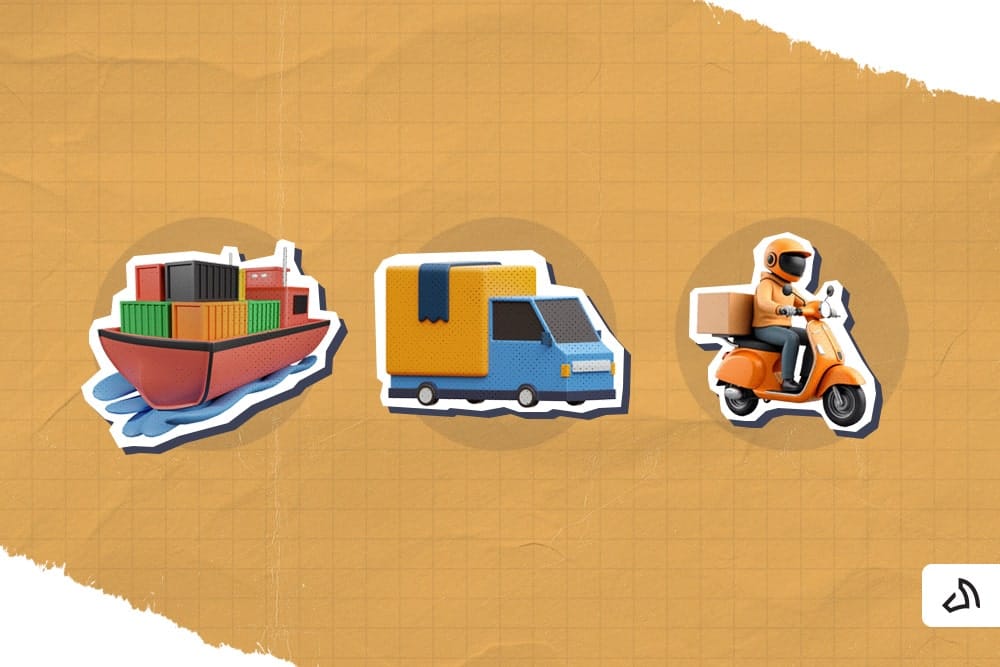
À quoi ressemble donc un opérateur 2PL dans la pratique ? Ces entreprises se présentent sous différentes formes, mais elles partagent toutes le même objectif : acheminer des marchandises d’un endroit à un autre dans le cadre d’une gestion efficace de la chaîne d’approvisionnement. En voici quelques exemples courants :
On confond souvent les prestataires 1PL, 2PL et 3PL, mais en réalité, ils répondent à des besoins différents selon le niveau d'externalisation dont une entreprise a besoin. Analysons leurs principales différences point par point :
Dans le cadre d'une configuration 1PL, vous gérez tout vous-même, de la gestion des stocks à l'expédition des produits, que ce soit avec votre propre véhicule ou via un bureau de poste local. Aucun système externe n'intervient.
Avec un prestataire logistique de niveau 2 (2PL), l'intégration est minimale. Vous réservez vos expéditions au fur et à mesure de vos besoins, et c'est là que s'arrête la relation.
En revanche, les prestataires logistiques tiers (3PL) s'intègrent directement à votre plateforme de commerce électronique, de sorte que les commandes sont automatiquement transférées dans leur système pour être traitées.
Dans le cadre d'un modèle 1PL, vous avez le contrôle total sur chaque étape : le stockage des stocks, la préparation des commandes et leur livraison par vos propres moyens. Si cela vous offre une maîtrise totale, cela implique également de consacrer davantage de temps et d'efforts à la logistique au détriment du développement de votre entreprise.
En faisant appel à un prestataire logistique de niveau 2, vous gardez le contrôle total de vos stocks, de vos installations de stockage et du traitement des commandes. Encore une fois, leur seule mission consiste à acheminer les marchandises d'un point A à un point B.
En revanche, un prestataire logistique (3PL) vous décharge de cette responsabilité. Non seulement il livre les produits à vos clients, mais il se charge également de la gestion des commandes et du stockage à votre place. Cela vous demande moins d'intervention directe, mais permet de mettre en place une chaîne d'approvisionnement plus efficace à mesure que votre entreprise se développe.
Avec un 1PL, vos coûts proviennent principalement de l'entretien des véhicules, des espaces de stockage et du personnel — des dépenses qui peuvent rapidement grimper à mesure que le volume de vos commandes augmente.
À première vue, les services 2PL sont souvent moins chers, car vous payez à chaque expédition et n'avez pas à vous engager dans des contrats à long terme. Mais à mesure que votre volume de ventes augmente, vous devez également vous développer. Tout gérer vous-même peut vous prendre beaucoup de temps et de ressources, ce qui vous empêche de vous consacrer à d'autres aspects de votre activité.
Le recours à un prestataire 3PL nécessite généralement un investissement plus important, mais celui-ci s'avère rentable car il vous fait gagner du temps, réduit vos frais généraux et fluidifie l'ensemble de votre chaîne logistique.
Une configuration 1PL est particulièrement adaptée aux petites entreprises ou aux start-ups qui gèrent tout elles-mêmes — par exemple, les commerçants locaux qui livrent eux-mêmes les commandes à leurs clients dans les environs.
Quant aux prestataires logistiques de niveau 2 (2PL), ils conviennent particulièrement aux vendeurs qui ont uniquement besoin de services de transport, par exemple pour expédier des commandes en gros vers Amazon FBA ou pour transférer des marchandises d'un entrepôt à un autre.
Un prestataire logistique tiers (3PL) est toutefois le choix idéal si vous êtes prêt à vous développer et que vous avez besoin d'un partenaire pour externaliser votre logistique. Il se chargera de tout : la gestion des commandes, les expéditions internationales et même la logistique inverse.
Voici un tableau qui met en évidence les principales différences, afin de vous permettre de les comparer plus facilement :
| Facteur | 1PL | 2PL | 3PL |
| Intégration | Aucune intégration externe. Le vendeur gère tout manuellement en interne | Minimaliste — principalement la gestion des expéditions | Avantage : s'intègre à votre plateforme de commerce électronique pour une automatisation |
| Commande | Une maîtrise totale des stocks, de l'emballage et de la livraison | Le vendeur gère les stocks et la gestion des commandes. | Le prestataire se charge pour vous de la gestion des commandes, du stockage et de la livraison. |
| Coût | Des coûts d'exploitation plus élevés liés à la possession et à l'entretien des véhicules, au personnel et aux locaux de stockage | Coût initial réduit, paiement à chaque envoi | Un investissement plus important, mais un gain de temps et de ressources à long terme |
| Idéal pour | Les petits commerçants ou les commerçants locaux qui gèrent eux-mêmes l'ensemble de la logistique | Les vendeurs qui ont uniquement besoin d'un service de transport | Des vendeurs prêts à se développer grâce à des solutions de stockage, de logistique et bien plus encore |
À lire également : 3PL vs 4PL : principales différences, avantages et comment choisir la bonne solution
Alors, pourquoi un vendeur choisirait-il un prestataire 2PL plutôt que de se tourner directement vers un prestataire 3PL ? Voici quelques avantages à opter pour un prestataire 2PL comme partenaire logistique externe :
Vous avez désormais compris que les prestataires logistiques de niveau 2 constituent une excellente option pour les vendeurs canadiens qui ont besoin de services de transport. Cependant, à mesure que votre entreprise se développe, il est essentiel de comprendre que la gestion logistique devient de plus en plus complexe. Vous aurez besoin d'un prestataire capable de gérer séparément le stockage, l'expédition et les retours.
Chez Stallion, nous sommes bien plus qu'un simple service d'expédition. Nous sommes un partenaire 3PL complet proposant des services d'externalisation logistique aux entreprises canadiennes. Que vous ayez besoin de services d'entreposage, d'expéditions transfrontalières vers les États-Unis ou de solutions complètes de gestion des commandes en ligne, nous avons ce qu'il vous faut.
Développez-vous plus intelligemment et optimisez votre croissance avec Stallion.

José est analyste commercial senior chez Stallion. Il contribue à l'amélioration des processus d'expédition de l'entreprise, travaille en étroite collaboration avec les partenaires de livraison et analyse les données d'expédition afin de trouver les meilleurs tarifs pour nos clients. En dehors du travail, José est passionné de course à pied ; il participe régulièrement à des courses de 5 km et 10 km, avec pour objectif de courir un marathon complet dans un avenir proche.
Nos concitoyens de Toronto se reconnaissent-ils dans cette situation ?
-
#petiteentreprise #entreprise #entrepreneur #réseauxsociaux #livraison #commerceenligne #commerceenligneauCanada #shopify #poshmark #b2b #saas #etsy #ebay #canada #petiteentrepriseauCanada #achetezlocalauCanada #entrepreneur
#toronto

Voici comment expédier rapidement et sans tracas de 🇨🇦 vers 🇺🇸 en tant que chef d'entreprise !
-
Des questions ? Posez-les 👇🏻 et enregistrez cette vidéo pour ne pas l'oublier !
-
#petiteentreprise #entreprise #entrepreneur #réseauxsociaux #livraison #commerceenligne #commerceenligneauCanada #shopify #poshmark #b2b #saas #etsy #ebay #canada #petiteentrepriseauCanada #achetezlocalauCanada #entrepreneur
Découvrez @drinkbenny, une marque de boissons énergisantes fondée par une femme 🇨🇦 ! Plutôt que de se concentrer sur leurs produits, ils adoptent une approche unique en organisant des événements en présentiel dans différentes villes canadiennes afin d'offrir une expérience à leur communauté 🧡
-
Que pensez-vous des événements en présentiel ? 💭
-
#petiteentreprise #entreprise #entrepreneur #réseauxsociaux #livraison #commerceenligne #commerceenlignecanadien #shopify #poshmark #b2b #saas #etsy #ebay #canada #petiteentreprise #canadienne #achetezlocalcanada #entrepreneur
Connaissez-vous la différence entre les conditions DDU et DDP pour les expéditions internationales 🌏 ?
-
Des questions ? Posez-les ci-dessous ! 👇🏻
-
#petiteentreprise #entreprise #entrepreneur #réseauxsociaux #expédition #commerceenligne #commerceenligneauCanada #shopify #poshmark #b2b #saas #etsy #ebay #canada #petiteentrepriseauCanada #achetezlocalauCanada #entrepreneur
Voici une astuce rapide pour gagner du temps en évitant de choisir parmi plusieurs options d'affranchissement
↪️ Activez l'automatisation du tarif postal le plus bas pour gagner du temps !
-
Des questions ? Posez-les ci-dessous ! 👇🏻
-
#petiteentreprise #entreprise #entrepreneur #réseauxsociaux #expédition #commerceenligne #commerceenlignecanadien #shopify #poshmark #b2b #saas #etsy #ebay #canada #petiteentreprise #canadienne #achetezlocalcanada #entrepreneur