Shipping to Canada
Save up to 50%

Shipping to the U.S.
Save up to 75%

Shipping Internationally
Save up to 85%

Same Day Delivery
Across the GTA

Returns
Lowest rate on the market
Fulfillment is one of the most repetitive parts of running a Shopify store. But it is also one of the easiest places to lose time and money if you don't set it up properly. So, how to fulfill orders on Shopify the right way?
This guide will answer that question. We will also cover Shopify's fulfillment options, how to fulfill them manually, and the settings to configure before you ship.
Every order placed on a Shopify store needs to be fulfilled before it reaches the customer. The process includes picking the product, packing it, and attaching a shipping label. Shopify gives sellers three ways to handle this process.
With manual fulfillment, the seller handles every step themselves. The seller reviews orders one at a time in the Shopify admin. Then, they pack each order by hand. Once done, they mark them as fulfilled after creating a label.
It's straightforward and works fine for low order volumes. However, as the order volume increases, this process becomes time-consuming.
Automatic order fulfillment uses apps or built-in Shopify features to fulfill orders without manual review. Sellers can set rules based on a specific product, shipping method, or location. That said, when an order comes in, they can automatically fulfill and label it. This reduces the daily workload but still requires the seller to manage inventory and packing.
Third-party fulfillment service (or 3PL fulfillment) hands the entire process to an outside company. The seller sends inventory to the 3PL's warehouse. Then, the 3PL completes the rest of the fulfillment. They will pick, pack, ship, and update Shopify with tracking information.
This is the most hands-off option and the one most sellers move to when order volume becomes too much to manage alone.
| Method | Best For | Who Does the Work | Time Cost |
| Manual | Low order volumes | The seller | High |
| Automatic | Growing stores with predictable rules | The seller, with apps handling repetitive tasks | Medium |
| Third-party (3PL) | High order volumes or sellers who want fulfillment off their plate | An outside fulfillment company | Low |
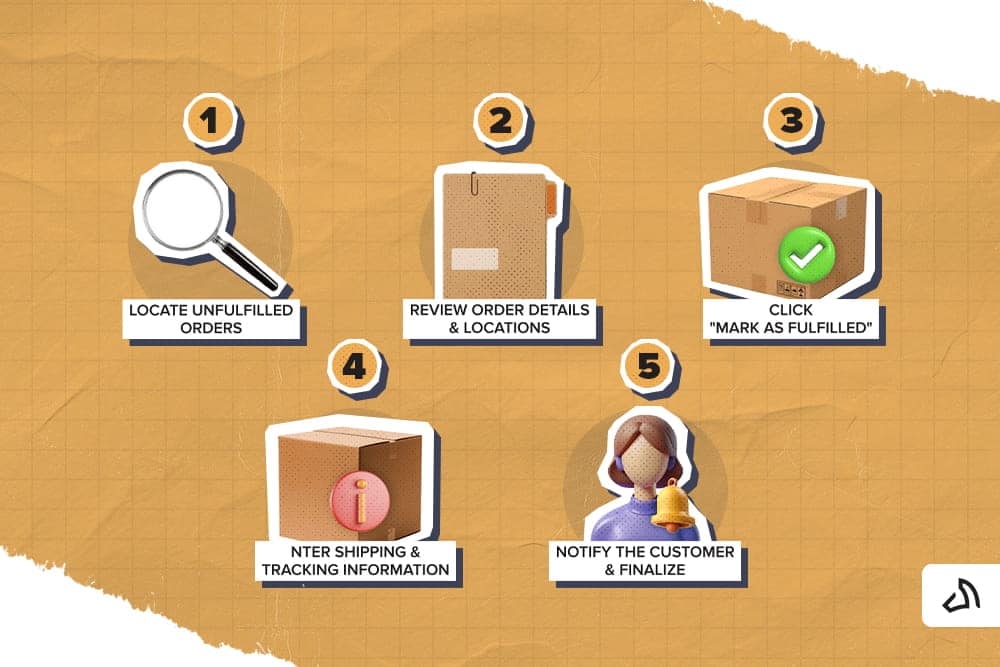
If you are fulfilling orders yourself, here is the process from start to finish:
For stores handling more than a handful of orders a day, fulfilling them one by one is slow. Shopify supports bulk fulfillment directly from the Orders page.
Bulk fulfillment works best when orders share the same fulfillment location and don't require manual tracking numbers. Shopify needs to know which location is fulfilling each order and can't always batch across them cleanly. So, it breaks down when a store has multiple locations.
It also doesn't work for partial fulfillment, where an order has items shipping at different times or from different locations. You have to handle those orders individually instead.

A few settings must be in place for fulfillment to run smoothly. Here are the ones you need to check first to avoid mistakes once order volume picks up:
Every Shopify store has at least one fulfillment location. Let's say you store inventory in more than one place, like a warehouse, a storefront, or a 3PL. Add each location and assign the correct stock levels in Shopify settings under Locations.
Shipping zones define where you ship to and what rates apply. Meanwhile, shipping profiles let you assign different rates or carriers to different products or locations. This setup determines what customers see at checkout and what it costs you to fulfill the order. If you're shipping across provinces and into the US, it can take the guesswork out of the equation.
Packing slips list what should be inside the order for the person packing it. Shopify includes a default packing slip template to speed up processing. If you want to customize it to include your branding or special handling notes, you can also do so. It is especially useful once you bring on staff or move to a 3PL. It keeps the packing process consistent.

Most written Shopify fulfillment guides assume US sellers. However, Canadian sellers run into a different set of problems, such as:
The issue isn't Canada Post as a carrier. It's the retail rates most sellers pay. Standard Canada Post postage is often higher than comparable carriers. This gap becomes obvious the first time a seller compares invoices. For stores shipping regularly, this cost adds up fast and eats into margins.
Additionally, the rates themselves aren't fixed. Sellers shipping through a platform like Stallion get discounts on Canada Post postage plus access to other Canadian carriers.
Customs forms, duties, and brokerage fees are among the factors that make cross-border shipping a bit complicated. If you're an inexperienced seller, this can be overwhelming.
One wrong document can trigger a domino effect that puts your brand's reputation in a bad light. It leads to support tickets that take time to resolve, delayed packages, and unexpected charges for customers.
Entering tracking numbers, customs information, and order details individually can take up so much time and can cause a lot of errors. As your business scales up, this manual workflow becomes one of the biggest time drains for a small team.
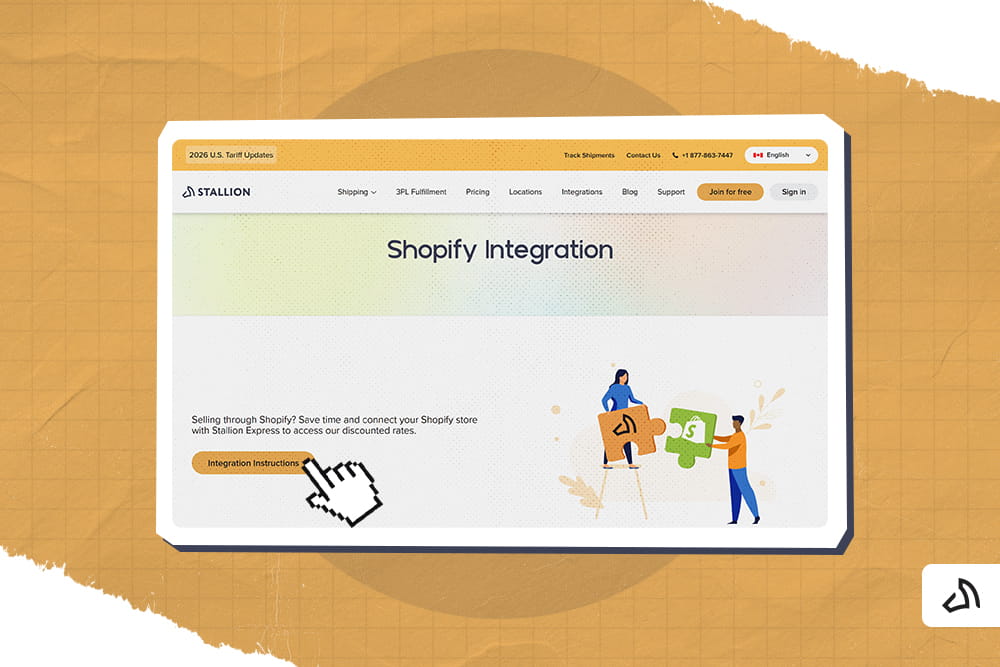
While these problems do exist, Stallion is here to help resolve them. Here's how it works:
Stallion connects directly to Shopify. You can pull in orders without any manual export or upload. Orders sync automatically, so you don't need to copy information between systems.
Stallion gives Canadian sellers access to discounted shipping rates, which closed the gap created by standard carrier pricing.
After creating a label, the system automatically writes the tracking information back to Shopify. This removes the manual data entry step and keeps order statuses accurate without extra work.
For sellers who want fulfillment fully off their plate, Stallion also offers 3PL fulfillment. Stallion stores and ships inventory from its warehouse. Our team picks, packs, and ships orders without the seller touching a single package.
Stallion operates over 250,000 square feet of owned warehouse space in Ontario, processes orders within 24 hours, and maintains 99.99% picking accuracy. Sellers get a dedicated account manager, and long-term contracts don't lock you in.
Yes. Shopify lets you bulk-fulfill orders. Select multiple unfulfilled orders on the Orders page and use the bulk action menu to mark them as fulfilled at once. This works well for orders shipping from the same location with the same carrier. However, you still need to add tracking numbers for each shipment.
An unfulfilled order has been placed and paid for but hasn't been packed, labelled, or shipped yet. Shopify flags these orders separately from fulfilled ones. This makes it easier for sellers to see which orders still need action before they can be closed out.
Yes. From the order page, sellers can select the fulfilled shipment and choose to cancel it. This reverts the order to unfulfilled status. It is useful if you marked a shipment as fulfilled by mistake. Or if you entered a tracking number incorrectly and you need to correct it.
No, Shopify includes fulfillment tools in the admin. You can fulfill orders manually without installing anything. Apps help automate the process, connect to a 3PL, or pull in discounted shipping rates. However, Shopify does not require you to use them for basic order fulfillment.
Fulfillment time depends on the method used and the seller's processing speed. However, most orders should move from unfulfilled to shipped within one to two business days. Delays beyond this window often signal a bottleneck in inventory checks, staffing, or manual data entry that is worth addressing.
Shopify gives sellers tools to fulfill orders manually, automatically, or through a third party. However, the right choice depends on order volume and how much time you want to spend on workflow. Canadian sellers, in particular, face challenges unique to the country.
Connecting Shopify to a platform like Stallion removes the manual work and lowers shipping costs. More importantly, it gives sellers back the time they would otherwise spend on labels and tracking numbers.
Ready to simplify your fulfillment? Sign up now, connect your Shopify store to Stallion, and start shipping for less today.

Candy Rada is a dedicated professional with tons of experience in content writing for the shipping industry. As a literature degree holder, she excels in creating engaging content with strategies that enhance brand visibility. She enjoys playing with her cats, reading dystopian books, and joining trivia games in her free time.
Can our fellow Torontonians relate?
-
#smallbusiness #business #entrepreneur #socialmedia #shipping #ecommerce #canadianecommerce #shopify #poshmark #b2b #saas #etsy #ebay #canada #canadiansmallbusiness #shoplocalcanada #entrepreneur
#toronto

Here’s your quick hassle free shipping from 🇨🇦 to 🇺🇸 as a business owner!
-
Any questions?! Leave them 👇🏻 and save this video so you don’t forget!
-
#smallbusiness #business #entrepreneur #socialmedia #shipping #ecommerce #canadianecommerce #shopify #poshmark #b2b #saas #etsy #ebay #canada #canadiansmallbusiness #shoplocalcanada #entrepreneur
Meet @drinkbenny a 🇨🇦 female founded energy drink brand! Instead of focusing on their products, they’re taking a unique approach by hosting in person events in different Canadian cities to offer an experience for their community 🧡
-
What are your thoughts on in person events? 💭
-
#smallbusiness #business #entrepreneur #socialmedia #shipping #ecommerce #canadianecommerce #shopify #poshmark #b2b #saas #etsy #ebay #canada #canadiansmallbusiness #shoplocalcanada #entrepreneur
Do you know the difference between DDU and DDP when shipping internationally 🌏 ?
-
Questions? Leave them below! 👇🏻
-
#smallbusiness #business #entrepreneur #socialmedia #shipping #ecommerce #canadianecommerce #shopify #poshmark #b2b #saas #etsy #ebay #canada #canadiansmallbusiness #shoplocalcanada #entrepreneur
Here’s a quick hack to save time from choosing multiple postage options
↪️ Turn on the lowest postage rate automation to save you time!
-
Questions? Leave them below! 👇🏻
-
#smallbusiness #business #entrepreneur #socialmedia #shipping #ecommerce #canadianecommerce #shopify #poshmark #b2b #saas #etsy #ebay #canada #canadiansmallbusiness #shoplocalcanada #entrepreneur