Shipping to Canada
Save up to 50%

Shipping to the U.S.
Save up to 75%

Shipping Internationally
Save up to 85%

Same Day Delivery
Across the GTA

Returns
Lowest rate on the market
E-commerce in Canada is booming! How does this affect businesses? This blog post will equip you with the knowledge and strategies to thrive in the Canadian market. Prepare to discover the secrets of profitable online retail sales in the e-commerce landscape in Canada.
E-commerce has become a steady part of how Canadians shop, and the market continues to grow year over year. It still makes up a smaller share of overall retail than some might expect.
However, more shoppers are turning to online stores. This growth means real opportunity for online sellers looking to reach Canadian customers.
You can immediately notice the transition of Canada's e-commerce market, from a rapidly expanding trend to a permanent, multi-billion-dollar cornerstone of the national economy.
Driven by excellent digital infrastructure and a highly tech-savvy consumer base, the market's value is now roughly 75-80 billion CAD. These numbers represent about 14.5% of all retail sales nationwide.
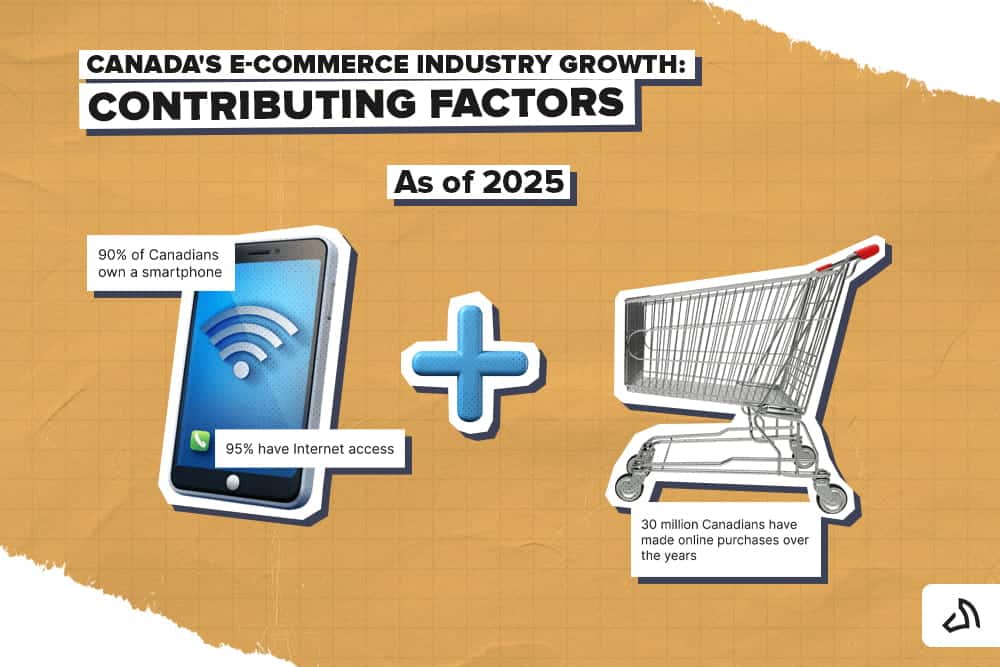
At the heart of this thriving digital economy is a highly connected population:
As of 2025, the Canadian retail landscape is defined by near-universal digitization. We should not just focus on analyzing online-only storefronts.
Instead, we can better understand the market by examining how deeply traditional businesses have integrated digital sales.
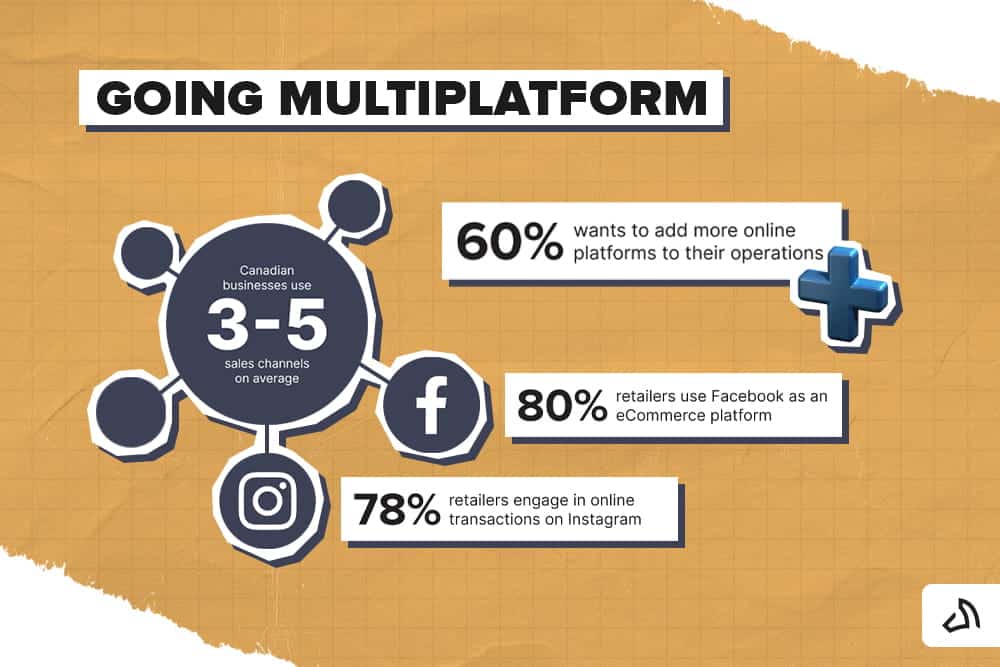
Today, 78% of Canadian retailers actively engage in online transactions. This makes e-commerce a foundational component of the national economy.
Canadian merchants are no longer relying on a single digital storefront to survive. On average, Canadian businesses use 3 to 5 sales channels.
Although it may seem excessive, this significantly captures diverse consumer segments.
This multi-channel approach successfully blends brick-and-mortar operations with various platforms. Sellers utilize standalone websites, third-party marketplaces, and social platforms to create a resilient, widespread sales network.
With this multi-channel strategy, we can confirm one thing. Social media has solidified its place as a primary sales engine.
An impressive 80% of retailers use Facebook as an e-commerce platform. Sellers rely on its mature advertising ecosystem and integrated shopping features.
But more than that, it has community groups to drive direct conversions and organic brand discovery.
Yes, the market's maturity is now visible. However, Canadian store owners are far from finished expanding their digital footprints.
Currently, 60% of retailers want to add more online platforms to their operations.
This strong intent to diversify highlights a highly competitive environment. Merchants are actively investing in new technology, broader platform integration, and fresh digital channels to capture more market share.
Source: SquareUp
While e-commerce has numerous things to offer, as the seller, it is your responsibility to know and understand the common issues Canadian businesses face.
Canada's size makes shipping harder. Sending orders to shoppers can take longer and cost more than expected. And if your customers live in northern areas or in remote locations, expect it to be even higher.
Carrier reliability also changes by region. So, many businesses end up using more than one carrier to cover the whole country.
Cross-border shipping brings more work. Selling in the US is a great opportunity for many sellers because of its huge market. However, it also means you have to deal with customs forms, duties, and delivery times.
Plus, you have to consider the additional costs this will incur, such as fuel surcharges and handling fees. At this point, it's harder to predict, which affects pricing and delivery promises.
To resolve this issue, some rely on fulfillment centres. However, some options cannot scale up with you. As order volume grows, getting orders picked, packed, and shipped out quickly gets harder. As a result, mistakes at this stage can cause delays or costly errors.
Businesses need to accept several payment methods, such as credit and debit cards or Interac e-Transfer, to cater to a wider audience. But accepting these methods is not free.
Every transaction may require processing fees, which can cut into profits. If you're a smaller business, you'll find it more challenging to negotiate lower rates without the sales volume.
Fraud protection is another challenge. Too much security at checkout can scare off customers, but too little opens the door to fraud. For businesses selling internationally, changing exchange rates can also affect pricing and profit.
Many businesses build a website, post on social media, and run ads. However, many also don't have a clear way to measure what's actually working.
Smaller businesses often don't have the budget or in-house skills to run SEO, content. email, and ads together as one strategy. Customers also expect a smooth experience across phone, tablet, and desktop. A slow or poorly optimized site can lose sales fast.
And competing against bigger companies with bigger budgets makes it harder to stand out.
Rules for online businesses keep changing. Sales tax and rules vary by province, which makes it confusing.
And adding to this confusion are consumer protection laws, privacy rules such as PIPEDA, and accessibility requirements.
International shipping adds more rules to track. You have to submit customs paperwork and other product requirements that vary by country. Missing any of these can lead to fines, delays, or shipments getting stuck at the border.
AI customer service, automated inventory tracking, and analytics can help businesses run more efficiently. But adopting them takes time, training, and money that smaller businesses don't always have.
Making new tools work with existing systems is often just as hard as picking the right tools. Let's say the store's online platform, inventory system, shipping software, and payment processor don't connect well.
It creates extra manual work and mistakes. If you think about it, it's more costly and time-consuming than it actually is.
Apart from that, cybersecurity is also a bigger concern now. Businesses need to protect customer data and payment information without blowing their budget.
Canada's e-commerce landscape includes online marketplaces, e-commerce platforms, and retailers with strong online stores. Here's a look at the top e-commerce websites in Canada by category.
Online marketplaces give businesses access to a large customer base without the need to build their own website. Here are some of the top online marketplaces in Canada for reaching more customers and growing sales.
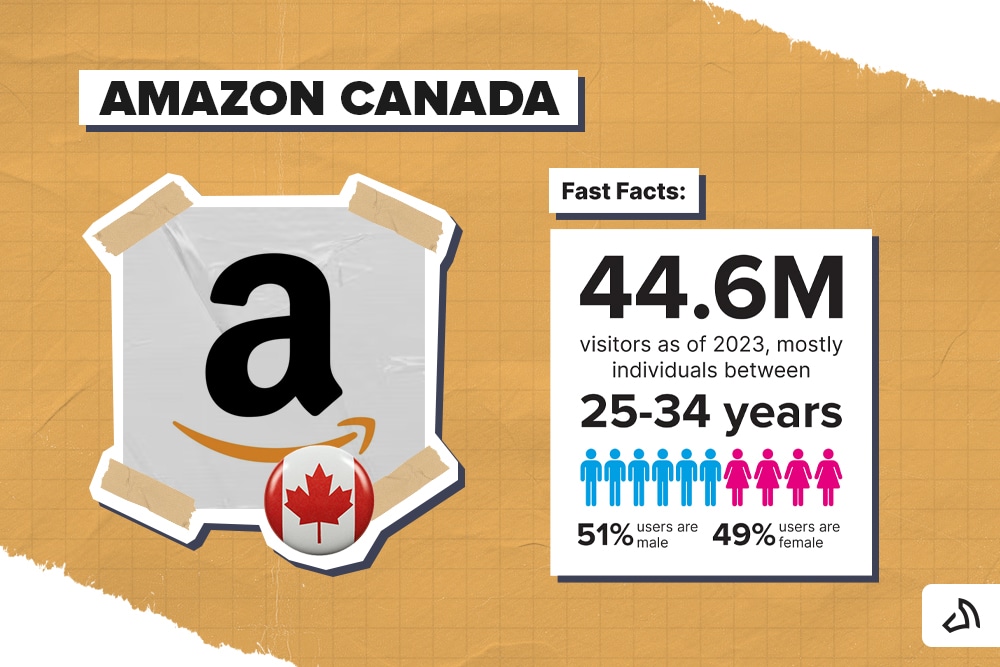
Amazon holds the undisputed top spot in the country's digital marketplace. In fact, it drives the largest share of retail e-commerce sales nationwide
As of 2025, the marketplace attracted a staggering 44.6 million visitors. The user base is almost perfectly split between 51% male and 49% female.
With the core audience consisting of tech-savvy young adults between 25 and 34 years old, we can conclude that it is a massive and balanced demographic.
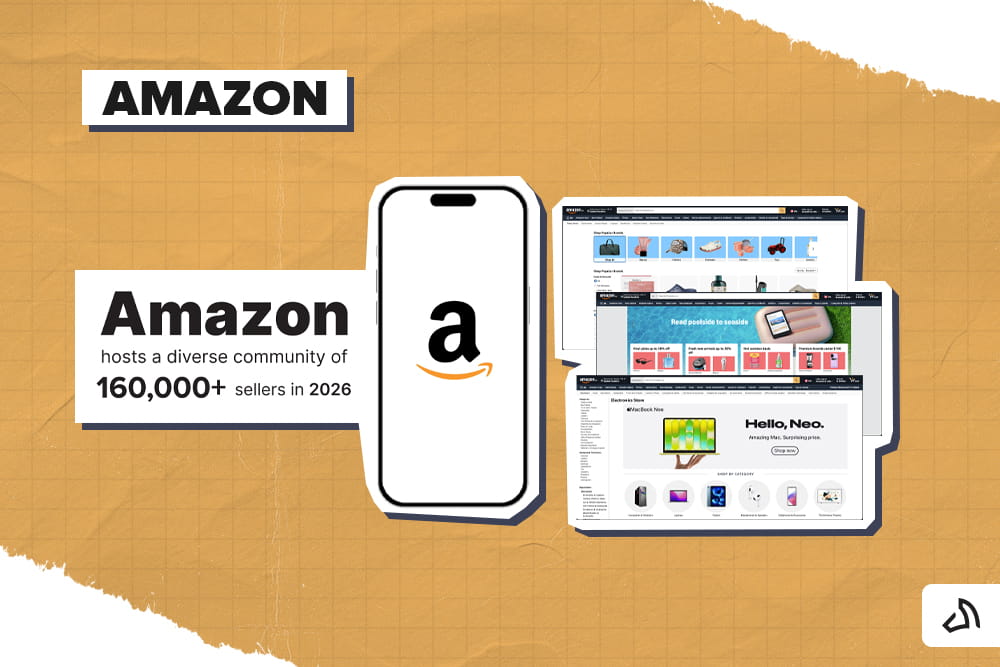
Fueling its massive inventory, Amazon hosts a wide range of communities of 160,000+ sellers in 2026. This extensive ecosystem provides a powerful launchpad for local entrepreneurs and independent brands to scale their retail operations nationwide.
| Pros | Cons |
| Huge built-in traffic, trusted by buyers, FBA handles storage/shipping | High fees, intense competition, limited brand control |
Source: Statista, Insider Intelligence, Semrush, AnnualReport.Com
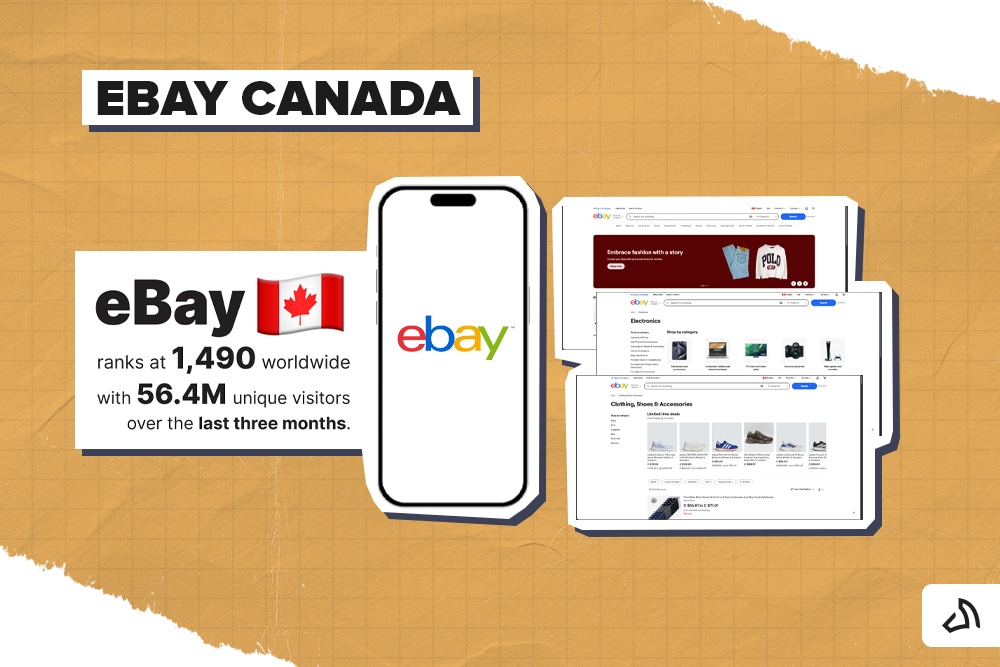
Ranked 1,490th worldwide with 56.4 million unique visitors, eBay is one of the most recognized marketplaces in Canada.
While historically known for its auction-style format, the marketplace has evolved significantly. Today, roughly 80% of all items sold on the marketplace are brand new. Many even utilize the "Buy It Now" fixed-price feature.
eBay has also positioned itself as a major hub for sustainability and "re-commerce" in Canada. Pre-owned and refurbished goods make up about 40% of its overall gross merchandise volume.
This is driven largely by cost-conscious millennial and Gen Z shoppers looking for value.
| Pros | Cons |
| Low startup cost, good for auction and used rare items, global reach | Fees add up, buyer-favoured dispute policies, less brand-building |
Source: Semrush.com

Etsy has created a distinct niche in Canada's e-commerce landscape. Now, it is the go-to marketplace for handmade, vintage, and one-of-a-kind goods.
Unlike Amazon or Walmart, it does not compete on price and mass selection. Instead, it thrives on creativity and craftsmanship. Roughly one-third of all transactions include personalized items, custom gifts, and made-to-order jewelry.
This gives small and independent Canadian sellers a dedicated storefront to reach a global audience.
In fact, Etsy supports 8.3 million active sellers worldwide. The vast majority of these businesses are small, home-based shops selling original or custom-made products.
Alongside this, the marketplace reported 92.3 million active buyers in 2026. Shopping habits on Etsy are deeply tied to convenience. Approximately 46% of Etsy's gross merchandise sales come directly through its mobile app.
| Pros | Cons |
| Built-in audience for handmade/vintage/craft goods, easy setup | Limited to niche categories, rising fees, high seller competition |
Source: Blogging Wizard
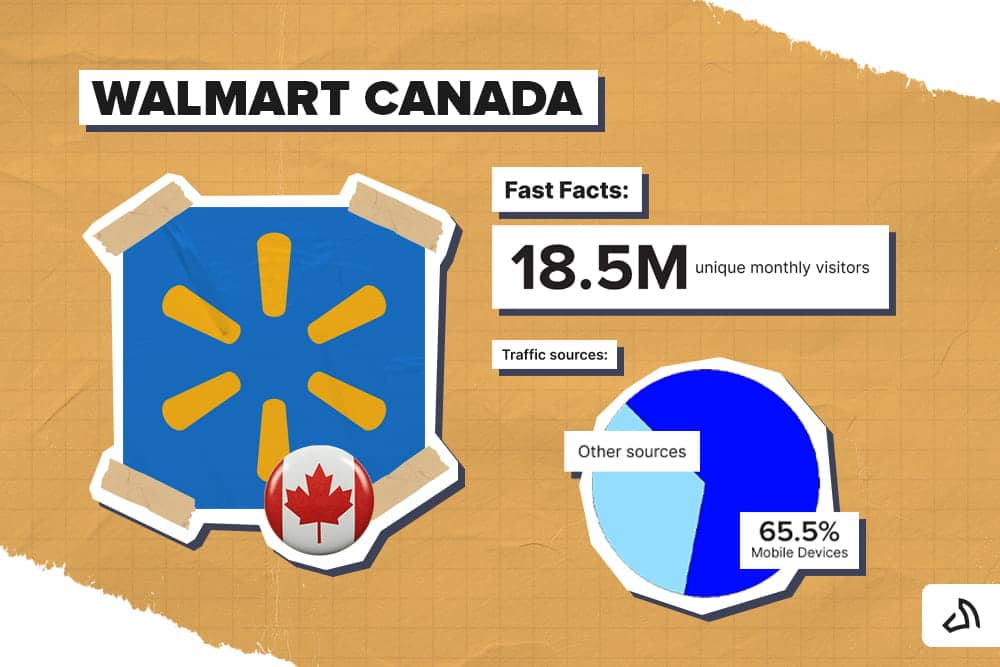
Walmart Marketplace has quickly become a serious contender in Canada's e-commerce space. Compared with Amazon, the competition is less intense.
It offers a low-barrier-to-entry alternative for sellers looking for built-in credibility and access to millions of ready-to-buy shoppers.
The marketplace draws 18.5 million unique monthly visitors in Canada. It's a steady exposure for sellers to a large, established customer base. Most of these visitors use mobile devices to browse and buy. This makes mobile-optimized listings and fast-loading product pages essential for sellers.
Globally, Walmart Marketplace has grown quickly. Now, it hosts more than 200,000 active third-party sellers, including sellers from Canada, the UK, and China.
Top categories would include home and kitchen, health and personal care, electronics and apparel. Many sellers also use Walmart Fulfillment Services (WFS) to handle storage and delivery.
| Pros | Cons |
| Access to Walmart's large customer base, no listing fees, lower competition than Amazon | Strict approval process, smaller reach than Amazon, less seller support |
Source: Semrush
E-commerce platforms provide the tools businesses need to create, manage, and scale their own online stores. Here are some of the leading e-commerce platforms in Canada for building a strong online presence.
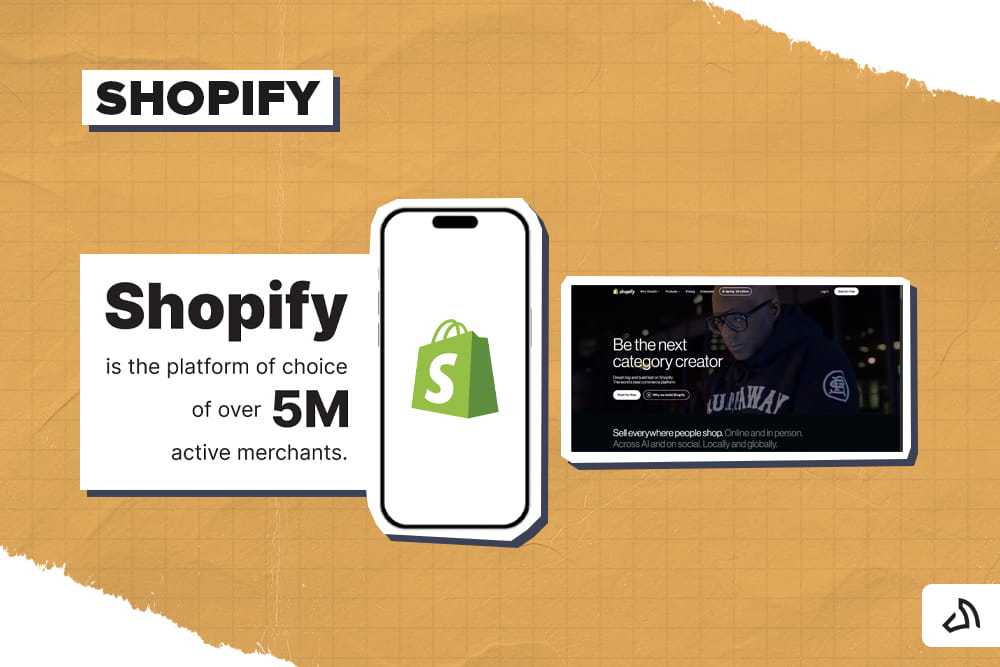
Shopify is not just a leading platform, but also a homegrown success story. Founded in Ottawa, it has grown into one of the world's most widely used commerce platforms.
With this platform, businesses don't have to rent space on a marketplace. Instead, they can build and fully own their online storefronts.
And unlike marketplaces, Shopify gives sellers complete control over branding, design, and customer experience. They also have access to a large app ecosystem for marketing, inventory, and fulfillment.
Now, Shopify supports over 5 million active merchants worldwide. This spans everything from small independent shops to large enterprise brands using Shopify Plus.
In Canada specifically, commands a dominant 45.67% market share among all dedicated e-commerce platform installations.
We can connect this to Shopify's native, accelerated checkout tool, Shop Pay, which is a critical conversion tool for merchants. It stores billing and shipping details securely for millions of users worldwide.
In return, it drastically lowers cart abandonment rates, particularly on mobile devices.
| Pros | Cons |
| Full control over brand and store design, no marketplace competition on your own page, wide app ecosystem | You handle all traffic/marketing, monthly fees plus transaction costs, more setup effort |
Source: Pop Up Smart
Related Post: Shopify Shipping vs ShipStation
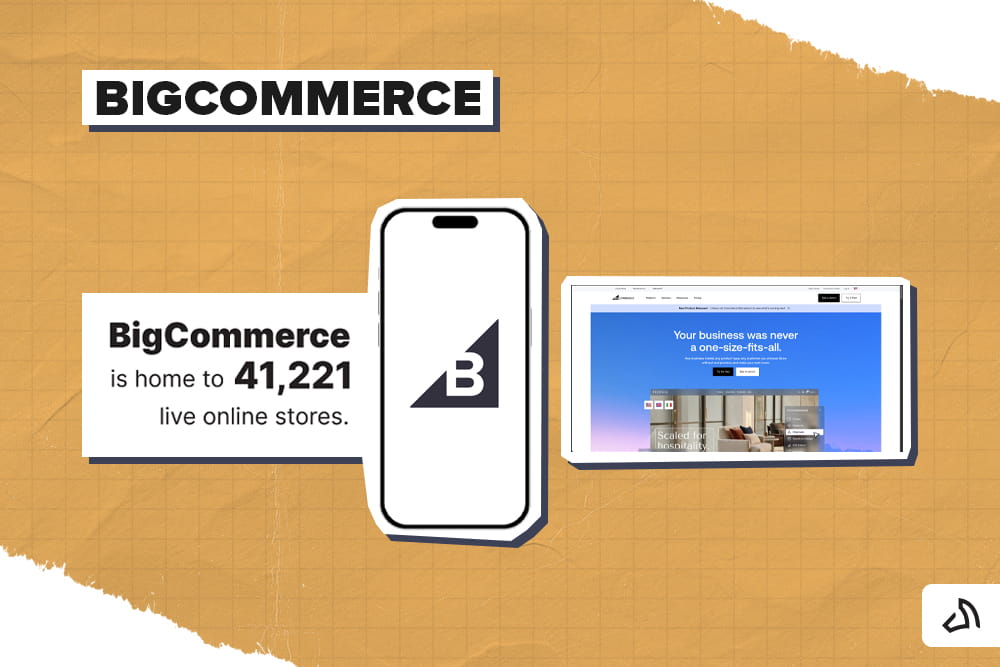
True to its name, BigCommerce is another big platform in Canada, especially for mid-market and enterprise sellers. It offers more built-in flexibility than Shopify without needing as many third-party apps. This includes:
While it's less common among small independent sellers, it has a solid footprint among growing and established brands.
The platform currently supports 41,221 live online stores worldwide, with Canada consistently ranking among its top markets alongside the US, UK, and Australia.
In fact, Canada generates around 6% of BigCommerce's total gross merchandise value. This places the country among the platform's five largest revenue-driving countries.
| Pros | Cons |
| Strong built-in features (no need for many apps), good for scaling, solid SEO tools | Steeper learning curve, template customization can be limited, pricier at higher tiers |
Source: Store Leads
Top online retailers can provide valuable insights into successful e-commerce strategies. Sellers can get ideas from website design and product pages, as well as from pricing, promotions, and customer experience. Here are some of Canada's leading online retailers worth exploring:
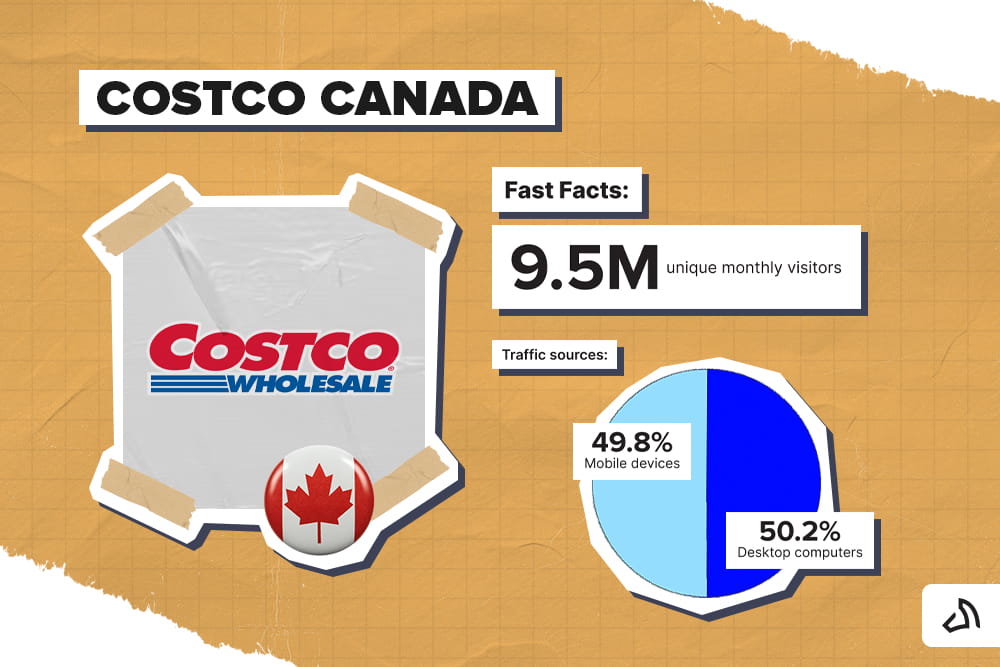
Costco is a dominant force in the country's digital retail space. And like Walmart, it successfully translated its highly successful membership warehouse model into a powerful online platform.
Source: SimilarWeb
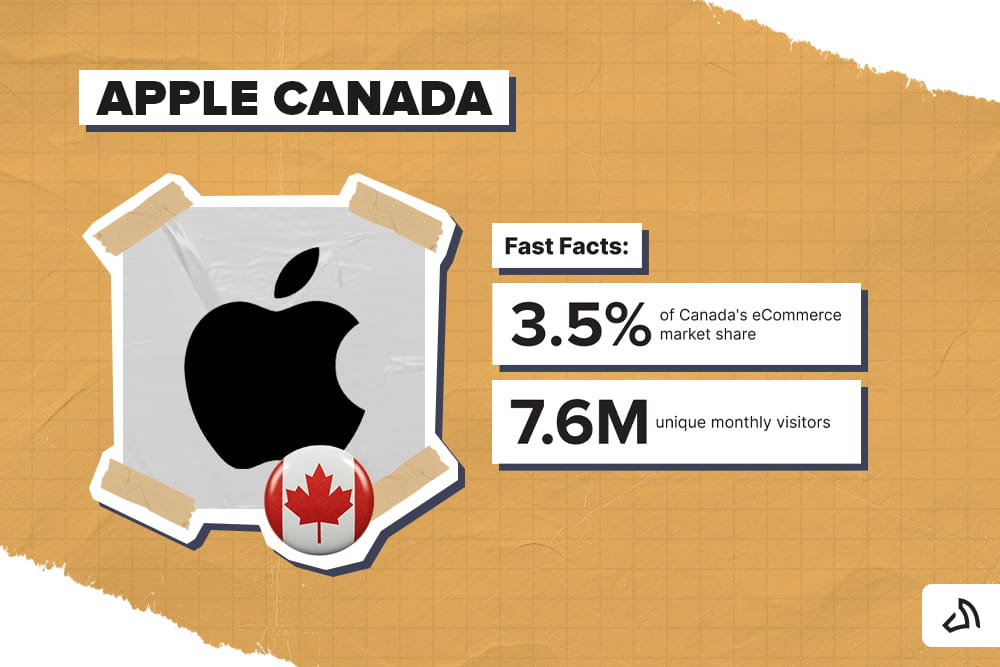
Apple is a major player in the country's digital retail space. And it's leveraging high brand loyalty to drive direct-to-consumer sales.
Source: Similar Web
For Canadian sellers seeking to stay ahead, knowing the popular product categories and trends reshaping online stores will provide you with insights and opportunities to elevate online businesses to new heights.
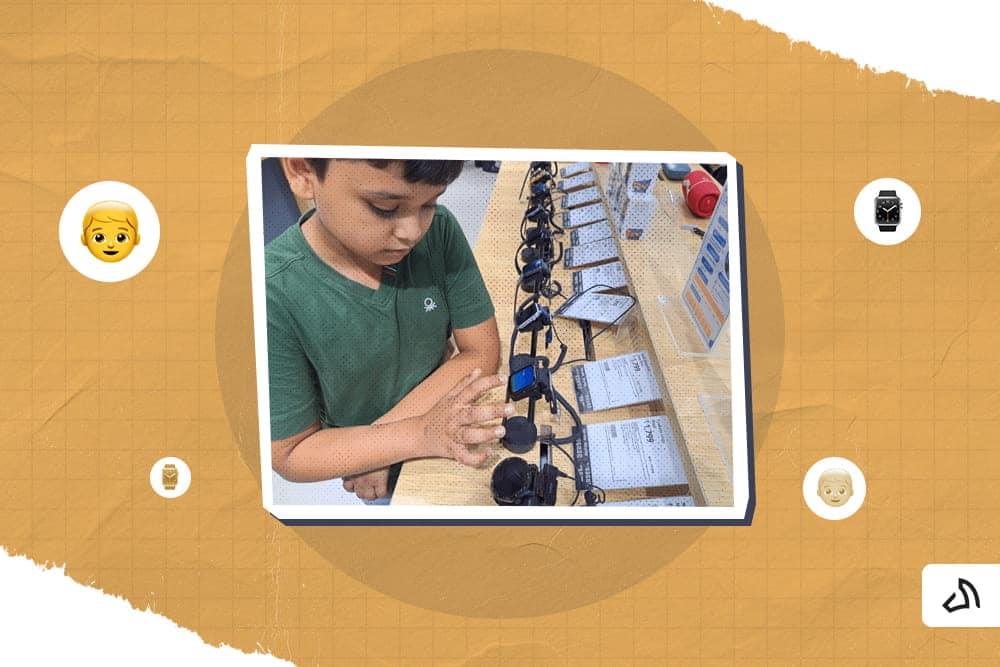
Electronic devices account for 58.33% of the category, with the Asia-Pacific region leading at a 38.18% share. Both trends are driven by manufacturing capacity and rising disposable income.
In Canada specifically, consumer electronics holds roughly 17.6% to 20.6% of e-commerce sales. This is one of the two largest categories alongside fashion and apparel.
Key Details:
Source: Statista

Mass-market clothing still makes up the majority of the category revenue at 67.8%. With this data, women's fashion is the largest single end-use segment at 51.4%.
Meanwhile, luxury apparel is the fastest-growing sub-segment at a 5.4% CAGR. This is driven by e-commerce expansion and high-net-worth consumer demand.
In Canada, fashion is consistently the largest or near-largest e-commerce category. Estimates range from about 21% to 26% of total online retail sales, depending on the source and year.
Key Details:

Residential applications account for 72.3% of category revenue. Functional and space-saving furniture holds the largest individual product share at 28.4%.
In Canada, home goods are a smaller category than fashion or electronics. However, it's still a consistent contributor to e-tailing growth. It sits with the aforementioned categories as one of the core categories driving e-tailing's dominant share of retail channels.
Key Details:

Skincare, hair care, and body care account for 83.4% of category revenue. Organic and clean beauty alternatives are outperforming conventional formulations at a 9.54% CAGR. This is primarily due to consumers prioritizing active ingredients and ethical sourcing.
In Canada, beauty and personal care is one of the fastest-growing categories by percentage. But still, its overall share is smaller than fashion or electronics.
Key Details:

Eco-friendly design is no longer a niche feature. Stricter regulations and changing consumer habits are turning it into a standard expectation across product categories.
In Canada, this plays out at the consumer level too. A 2026 survey of 4,200 Canadian online shoppers found that 54% consider a brand's environmental practices when making a purchase decision. 72% say sustainable packaging affects their purchase decisions, and Canada's sustainable packaging market reached USD 9.2 billion in 2025.
Key Details:
By now, you're armed with the knowledge to understand the Canadian e-commerce market. Remember, the key to success lies in continuous learning and adaptation. With the data presented above, you're on your way to building a thriving online business.

Jose is Stallion's Senior Business Analyst. He helps improve the company’s shipping processes, works closely with delivery partners, and looks at shipping data to find the best prices for our customers. Outside of work, Jose has a passion for running, regularly completing 5k and 10k runs, with the goal of running a full marathon in the near future.

Can our fellow Torontonians relate?
-
#smallbusiness #business #entrepreneur #socialmedia #shipping #ecommerce #canadianecommerce #shopify #poshmark #b2b #saas #etsy #ebay #canada #canadiansmallbusiness #shoplocalcanada #entrepreneur
#toronto

Here’s your quick hassle free shipping from 🇨🇦 to 🇺🇸 as a business owner!
-
Any questions?! Leave them 👇🏻 and save this video so you don’t forget!
-
#smallbusiness #business #entrepreneur #socialmedia #shipping #ecommerce #canadianecommerce #shopify #poshmark #b2b #saas #etsy #ebay #canada #canadiansmallbusiness #shoplocalcanada #entrepreneur
Meet @drinkbenny a 🇨🇦 female founded energy drink brand! Instead of focusing on their products, they’re taking a unique approach by hosting in person events in different Canadian cities to offer an experience for their community 🧡
-
What are your thoughts on in person events? 💭
-
#smallbusiness #business #entrepreneur #socialmedia #shipping #ecommerce #canadianecommerce #shopify #poshmark #b2b #saas #etsy #ebay #canada #canadiansmallbusiness #shoplocalcanada #entrepreneur
Do you know the difference between DDU and DDP when shipping internationally 🌏 ?
-
Questions? Leave them below! 👇🏻
-
#smallbusiness #business #entrepreneur #socialmedia #shipping #ecommerce #canadianecommerce #shopify #poshmark #b2b #saas #etsy #ebay #canada #canadiansmallbusiness #shoplocalcanada #entrepreneur
Here’s a quick hack to save time from choosing multiple postage options
↪️ Turn on the lowest postage rate automation to save you time!
-
Questions? Leave them below! 👇🏻
-
#smallbusiness #business #entrepreneur #socialmedia #shipping #ecommerce #canadianecommerce #shopify #poshmark #b2b #saas #etsy #ebay #canada #canadiansmallbusiness #shoplocalcanada #entrepreneur