Shipping to Canada
Save up to 50%

Shipping to the U.S.
Save up to 75%

Shipping Internationally
Save up to 85%

Same Day Delivery
Across the GTA

Returns
Lowest rate on the market
If you are a Canada-based seller and export orders to the US, the rules you previously knew have already changed since 2025. The US government suspended its de minimis exemption for low-value shipments. But how do de minimis Canada-to-US shipments affect sellers now?
This guide answers that question, explains what happened to Section 321 in the US, and shows how Canadian online businesses can adjust their shipping strategy without losing customers or margin.
De minimis is the value below which a shipment can enter a country without the receiver paying duties or taxes. In this case, it's the cutoff amount before US customers need to pay duties and taxes for the orders they purchased from a Canada-based seller.
For Canadian sellers, the number that mattered most was not the Canadian threshold at all. It was the United States' own de minimis limit. It's what determines whether a package heading south crossed the border duty-free.
For nearly a decade, Section 321 of the US Tariff Act set that threshold at 800 USD. Any shipment valued at 800 USD or less could enter the US through a simplified customs process. No duties will be assessed, and only minimal paperwork will be required.
This made it possible for Canadian online businesses of almost any size to ship directly to individual US customers the same way they would ship across Canada, without acting as a formal importer on every order.
Unfortunately, that 800 USD exemption did not survive 2025. In mid-2025, the US government first suspended de minimis treatment for goods of Chinese and Hong Kong origin. Then, the suspension expanded to every country in the world, effective August 29, 2025.
Section 321 entry is no longer available for de minimis treatment. All shipments must now go through formal or informal customs entry, and applicable duties and fees will be assessed regardless of value.
Canadian shippers have also seen the introduction of a Section 122 surcharge that applies specifically to certain low-value shipments. This is another cost on top of standard duties.
There is also a longer-term legislative piece to this. Signed in 2025, the One Big Beautiful Bill Act permanently repeals Section 321 for commercial shipments effective July 1, 2027. This introduces civil penalties for businesses caught splitting orders or misstating values to try to stay under the old threshold.
In short, this is not a temporary disruption. It is a structural change in how cross-border eCommerce works, and that is why this guide exists.
The truth is, the end of Section 321 is not just a single-line change in how you handle US-bound shipments. It affects your pricing, fulfillment reliability, and how customers feel about buying from you. This is where Canadian sellers feel it most:
Landed cost is the amount sellers pay to get their products to their customer, including shipping fees, applicable duties and taxes, and brokerage fees.
Before, most direct-to-consumer (DTC) orders under 800 USD bypassed duties entirely. They could cross the border completely duty-free and tax-free. As a Canadian seller, this keeps landed costs predictable and low.
However, with Section 321 gone, nearly every shipment into the US now carries a duty cost that didn't exist before. For many Canadian online sellers, this can quietly erode margins on every order unless pricing and cost models are updated.
Full customs entry means more documentation requirements.
Shipments with missing or incorrect information are far more likely to be held, delayed, or rejected at Customs and Border Protection (CBP). For a growing online business, a pattern of delayed shipments can quickly become a fulfillment bottleneck.
Perhaps the most visible impact of the suspension is on customers. Before the suspension, small orders, as mentioned, can just bypass customs fees entirely. They rarely expect any extra charges upon arrival.
But now, surprise fees can happen at any time, and this can negatively impact the business. Unexpected charges at the door are one of the fastest ways to damage trust and drive negative reviews. Of course, this will happen even if you follow the rules correctly.
That said, Canadian businesses now need a plan for who pays duties, when, and how they communicate it to customers before checkout.
Stallion works with Canadian eCommerce businesses to adapt to this new customs environment without passing all the pain on to customers. Here's how we handle the situation:
Stallion doesn't leave sellers guessing what a shipment will cost once it hits the border. We provide upfront brokerage pricing so you know your landed cost before the shipment leaves the warehouse. Plus, we keep brokerage fees low. This helps protect your margins even as duty exposure has gone up across the board.
Not every shipment needs to pay full duty. Certain goods qualify for CUSMA preferential treatment. This means that when a shipment meets the rules of origin and has the right documentation, it can still reduce or eliminate duty costs. Stallion helps sellers identify which products in their catalogue qualify and get the paperwork right. As a result, you will not pay more than you have to.
The most direct way to reduce duty exposure per order is to stop crossing the border for every sale.
Stallion provides US-based fulfillment, and Canadian businesses can take advantage of that option. They can import inventory in bulk, pay duties once, and then ship domestically to US customers from within the US.
This removes the repeated customs friction of shipping one small parcel at a time and typically speeds up delivery too.
Getting ready for the post-de minimis era does not have to mean overhauling your entire operation. Here is where to start inside your Stallion dashboard:
The first thing you need to do is go through your full catalogue. Are there products that your US customers regularly buy? If so, note their declared value, country of origin, and any existing documentation.
Providing accurate product-level data is crucial to duty treatment. So, this audit is the foundation for everything else.
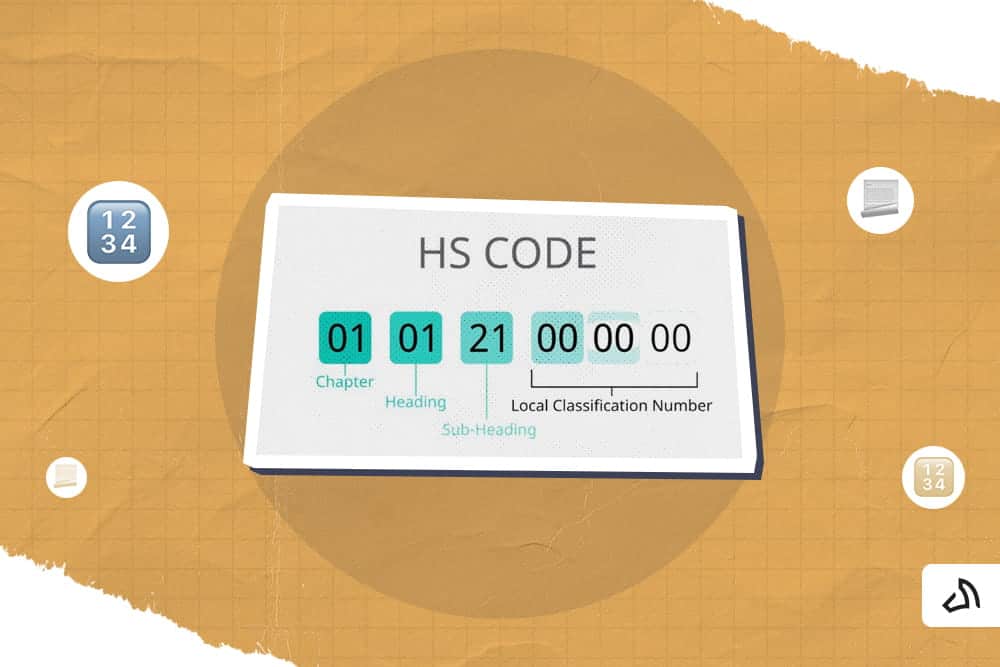
Every product needs a correct HS code to clear customs properly. Vague or incorrect codes are among the most common reasons why customs authorities hold or reassess shipments. Work through your catalogue product by product. Then, confirm each HS code is accurate and specific, not just a close approximation.

Once your catalogue and HS codes are in order, review your shipment information. Make sure the details provided for customs are accurate and complete. Keep product descriptions, values, and classification information up to date.
This reduces errors and avoids unnecessary delays during customs clearance. It can also keep your fulfillment timelines aligned with customer expectations as formal entry requirements apply.
Are you running into issues or aren't sure what information you need to provide? You don't have to worry. Just reach out to Stallion's Customer Service team. They can help point you in the right direction and guide you through the next steps.
Related Topic: Cheapest Shipping from Canada to the US

Outbound postal shipments often face slower border processing and batch-inspection delays. In this case, Canada Post handles the packages and hands them off to USPS. Meanwhile, using a commercial courier network utilizes direct border entry and electronic manifests. This ensures faster customs clearance and full end-to-end tracking for your US sales.
Yes. Now that Section 321 de minimis treatment is no longer available, every commercial shipment entering the US needs a commercial invoice. This should contain an accurate description of the goods, their value, their country of origin, and the correct HS code. Missing or incomplete invoices can hold or delay the shipment at the border.
Goods that qualify for preferential treatment under CUSMA can reduce or eliminate the duties that would otherwise apply. To qualify, a product generally needs to meet the agreement's rules of origin. This means that the products should be made or substantially transformed in Canada, the US, or Mexico. Along with this, the shipment also needs the proper origin documentation. For Canadian sellers whose products qualify, this can offset a meaningful part of the cost increase created by the end of Section 321.
The end of Section 321 is not a temporary bump in the road. It is a permanent shift in how Canadian businesses need to think about cross-border fulfillment. The businesses that adjust now will be in a much stronger position than those still operating under the old rules.
Stay ahead of changing customs requirements and keep your shipments moving with Stallion. We can help Canadian sellers make that change without any hassle. With:
Sellers no longer have to deal with the border. So, create a Stallion account today to get started!

Jose is Stallion's Senior Business Analyst. He helps improve the company’s shipping processes, works closely with delivery partners, and looks at shipping data to find the best prices for our customers. Outside of work, Jose has a passion for running, regularly completing 5k and 10k runs, with the goal of running a full marathon in the near future.
Can our fellow Torontonians relate?
-
#smallbusiness #business #entrepreneur #socialmedia #shipping #ecommerce #canadianecommerce #shopify #poshmark #b2b #saas #etsy #ebay #canada #canadiansmallbusiness #shoplocalcanada #entrepreneur
#toronto

Here’s your quick hassle free shipping from 🇨🇦 to 🇺🇸 as a business owner!
-
Any questions?! Leave them 👇🏻 and save this video so you don’t forget!
-
#smallbusiness #business #entrepreneur #socialmedia #shipping #ecommerce #canadianecommerce #shopify #poshmark #b2b #saas #etsy #ebay #canada #canadiansmallbusiness #shoplocalcanada #entrepreneur
Meet @drinkbenny a 🇨🇦 female founded energy drink brand! Instead of focusing on their products, they’re taking a unique approach by hosting in person events in different Canadian cities to offer an experience for their community 🧡
-
What are your thoughts on in person events? 💭
-
#smallbusiness #business #entrepreneur #socialmedia #shipping #ecommerce #canadianecommerce #shopify #poshmark #b2b #saas #etsy #ebay #canada #canadiansmallbusiness #shoplocalcanada #entrepreneur
Do you know the difference between DDU and DDP when shipping internationally 🌏 ?
-
Questions? Leave them below! 👇🏻
-
#smallbusiness #business #entrepreneur #socialmedia #shipping #ecommerce #canadianecommerce #shopify #poshmark #b2b #saas #etsy #ebay #canada #canadiansmallbusiness #shoplocalcanada #entrepreneur
Here’s a quick hack to save time from choosing multiple postage options
↪️ Turn on the lowest postage rate automation to save you time!
-
Questions? Leave them below! 👇🏻
-
#smallbusiness #business #entrepreneur #socialmedia #shipping #ecommerce #canadianecommerce #shopify #poshmark #b2b #saas #etsy #ebay #canada #canadiansmallbusiness #shoplocalcanada #entrepreneur