Shipping to Canada
Save up to 50%

Shipping to the U.S.
Save up to 75%

Shipping Internationally
Save up to 85%

Same Day Delivery
Across the GTA

Returns
Lowest rate on the market
Are you shipping internationally, especially to US-based customers? If so, you might have already heard of the Incoterms DDU vs DDP. These shipping terms can affect your customer's experience, your costs, and how often your parcels get stuck at customs. But what are these terms actually?
This guide breaks down what each one means, who pays what, and why the choice matters more than ever for Canadian sellers shipping into the US.
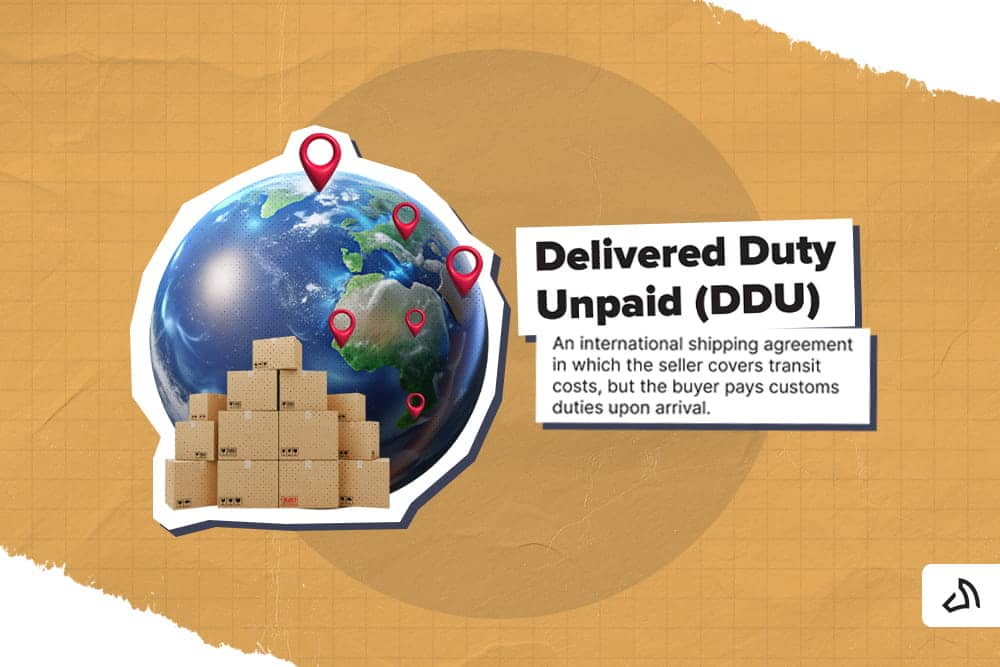
Delivered Duty Unpaid, or DDU, means the seller ships the goods. Under the agreement, however, the buyer pays any import duties, taxes, and brokerage fees once the parcel reaches its destination country. The carrier collects this payment before releasing the parcel.
Under DDU, the seller's responsibilities only include packaging, labelling, and arranging transportation. Once the parcel reaches the destination country, their job ends. The seller does not calculate, collect, or remit duties and taxes.
The buyer pays the total landed cost after the parcel has already left the seller's hands. This includes customs duties, taxes, and often a brokerage fee the carrier charges to process the payment.
While this process lessens the burden on the seller, it creates an unexpected issue for the buyer. They will rarely see these charges at checkout, which results in surprise fees.
Pros
Cons
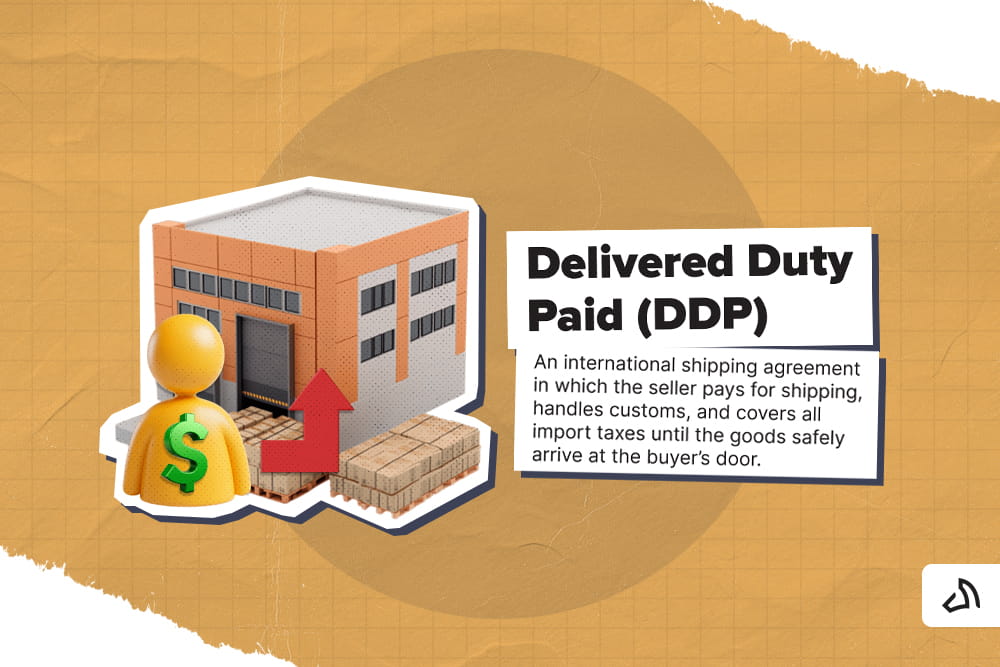
Delivered Duty Paid, or DDP, means the seller is responsible for paying import duties and taxes. The buyer sees one final price at checkout and pays nothing extra when the parcel arrives.
Under DDP, the seller already calculates the landed costs based on the commercial invoice. This includes the product price, shipping, duties, and taxes. The seller then collects this amount at checkout and remits the duties and taxes to customs. Often, sellers complete this process through a carrier or a customs broker.
Since the seller will complete the payment process, the buyer only needs to pay once at checkout. No surprise charges, no brokerage fees at the door, and no delays while the seller sorts out the duties and other related charges.
Pros
Cons
Here is a side-by-side look at how the two methods compare on the factors that matter most:
| Key Elements | DDU | DDP |
| Who pays import duties? | Buyer, at delivery | Seller, prepaid at checkout |
| Who handles customs clearance? | Carrier, on the buyer's behalf | Seller or seller's carrier, before delivery |
| Risk of abandoned parcels | Higher, due to unexpected charges | Lower, since buyers will see the costs upfront |
| Delivery speed | Slower, customs authorities can hold parcels | Faster, since the buyers have already paid the duties |
The US de minimis exemption once allowed shipments under $ 800 USD to enter the US duty-free. That said, it has been suspended for all countries since August 2025. The US Customs and Border Protection (CBP) codified this suspension into a regulation in June 2026. It is scheduled, however, for permanent statutory repeal in mid-2027.
In practical terms, this means a Canada-to-US parcel is generally dutiable now, no matter how small the order is.
This change removes the safety net that small sellers used to rely on. Under DDU, the carrier fronts these charges and collects from the customer at the door. Often, they add a brokerage or disbursement fee on top.
This has become the single biggest source of Canadian seller complaints for US-bound orders. Showing the full landed cost upfront through DDP is what American buyers expect in 2026. It measurably cuts both cart abandonment and delivery refusals.
For Canadian sellers, DDP is no longer just a nicer customer experience. It is becoming the practical default for shipping into the US.
For More Information, Check This Page: 2026 U.S. Tariffs - Live Updates
Beyond keeping parcels moving through customs, DDP shapes how customers feel about buying from your store in the first place. Here is where that impact shows up most:
Surprise charges can often lead to customer frustration. Worse, they can end a customer relationship before it starts. DDP prevents these situations from happening and encourages customers to order again.
When the checkout price is the only charge the customer pays, there is nothing left to second-guess. This builds trust and reduces the hesitation that leads to cart abandonment.
Sellers don't have to wait for the payment or the buyer's response. Parcels with duties paid move through customs faster than those with DDU. Faster clearance means faster delivery. As a result, this supports better reviews and repeat business.
Sellers and buyers no longer have to be confused between Delivered at Place (DAP) and DDU. In Incoterms 2010, DAP officially replaced DDU. The latter is the older, now-obsolete term. However, you’ll still see “DDU” used informally. Still, DAP is the official term under both Incoterms 2010 and 2020.
Customs authorities or the carrier hold the parcel until the clearance fees are paid. If the customer refuses or doesn't respond, the parcel can sit in storage, incur storage fees, and eventually be returned to the seller. In the worst case, the authorities or the carrier will abandon it. As the seller, you typically end up covering the return shipping costs and losing the sale. This is on top of any fines or penalties tied to the abandoned shipment.
DDP covers federal import duties. Often, it also covers the merchandise processing fee and customs brokerage costs tied to bringing the parcel into the country. State sales tax is a separate obligation. The sales tax collection and remittance process typically handles it, not through your DDP shipping arrangement. It's worth confirming with your carrier or customs broker exactly which charges are bundled into your DDP fees, since this can vary.
It depends on whose name is listed as the Importer of Record on the customs entry. Under most DDP arrangements, your carrier or their broker is the Importer of Record, not you. This means they are the party entitled to file for a duty refund or drawback. Recovering these costs usually requires cooperation from your carrier or broker. You must provide proof of duties paid, such as the customs entry summary. In many cases, you cannot simply recover duties on low-value returned orders. So, it's worth building this cost into your return policy rather than assuming it will be refunded.
DDU and DDP are not just shipping terms. They shape how your customers experience your brand at the most sensitive point in the order process. With duty-free thresholds gone in the US, DDP has moved from a nice-to-have to a practical necessity for every international shipment heading south of the border.

Stallion helps online sellers ship across borders without the usual complexity. Here's how we take the guesswork out of DDP shipping:
Stallion calculates landed costs and automatically applies DDP shipping labels. You don't need to track duty rates or build your own compliance process manually.
Canadian sellers can easily access competitive cross-border shipping rates. With Stallion, switching to DDP does not mean absorbing an unmanageable cost increase.
Ready to simplify DDP shipping for your business? Explore Stallion's cross-border shipping solutions and ship with confidence.

Jose is Stallion's Senior Business Analyst. He helps improve the company’s shipping processes, works closely with delivery partners, and looks at shipping data to find the best prices for our customers. Outside of work, Jose has a passion for running, regularly completing 5k and 10k runs, with the goal of running a full marathon in the near future.
Can our fellow Torontonians relate?
-
#smallbusiness #business #entrepreneur #socialmedia #shipping #ecommerce #canadianecommerce #shopify #poshmark #b2b #saas #etsy #ebay #canada #canadiansmallbusiness #shoplocalcanada #entrepreneur
#toronto

Here’s your quick hassle free shipping from 🇨🇦 to 🇺🇸 as a business owner!
-
Any questions?! Leave them 👇🏻 and save this video so you don’t forget!
-
#smallbusiness #business #entrepreneur #socialmedia #shipping #ecommerce #canadianecommerce #shopify #poshmark #b2b #saas #etsy #ebay #canada #canadiansmallbusiness #shoplocalcanada #entrepreneur
Meet @drinkbenny a 🇨🇦 female founded energy drink brand! Instead of focusing on their products, they’re taking a unique approach by hosting in person events in different Canadian cities to offer an experience for their community 🧡
-
What are your thoughts on in person events? 💭
-
#smallbusiness #business #entrepreneur #socialmedia #shipping #ecommerce #canadianecommerce #shopify #poshmark #b2b #saas #etsy #ebay #canada #canadiansmallbusiness #shoplocalcanada #entrepreneur
Do you know the difference between DDU and DDP when shipping internationally 🌏 ?
-
Questions? Leave them below! 👇🏻
-
#smallbusiness #business #entrepreneur #socialmedia #shipping #ecommerce #canadianecommerce #shopify #poshmark #b2b #saas #etsy #ebay #canada #canadiansmallbusiness #shoplocalcanada #entrepreneur
Here’s a quick hack to save time from choosing multiple postage options
↪️ Turn on the lowest postage rate automation to save you time!
-
Questions? Leave them below! 👇🏻
-
#smallbusiness #business #entrepreneur #socialmedia #shipping #ecommerce #canadianecommerce #shopify #poshmark #b2b #saas #etsy #ebay #canada #canadiansmallbusiness #shoplocalcanada #entrepreneur