Shipping to Canada
Save up to 50%

Shipping to the U.S.
Save up to 75%

Shipping Internationally
Save up to 85%

Same Day Delivery
Across the GTA

Returns
Lowest rate on the market
Efficiency is always an advantage when running a business. And behind every successful one is a well-structured supply management system.
In this guide, we'll break down what it is, how it differs from supply chain management, and the key pillars that drive success.
Supply management refers to specific tasks a business needs to operate. This includes acquiring, managing, and optimizing the goods and services they offer. It also covers everything you can think of when operating a company, such as:
The goal here is simple. Get the right products, at the right time, at the best possible cost without compromising quality or reliability.
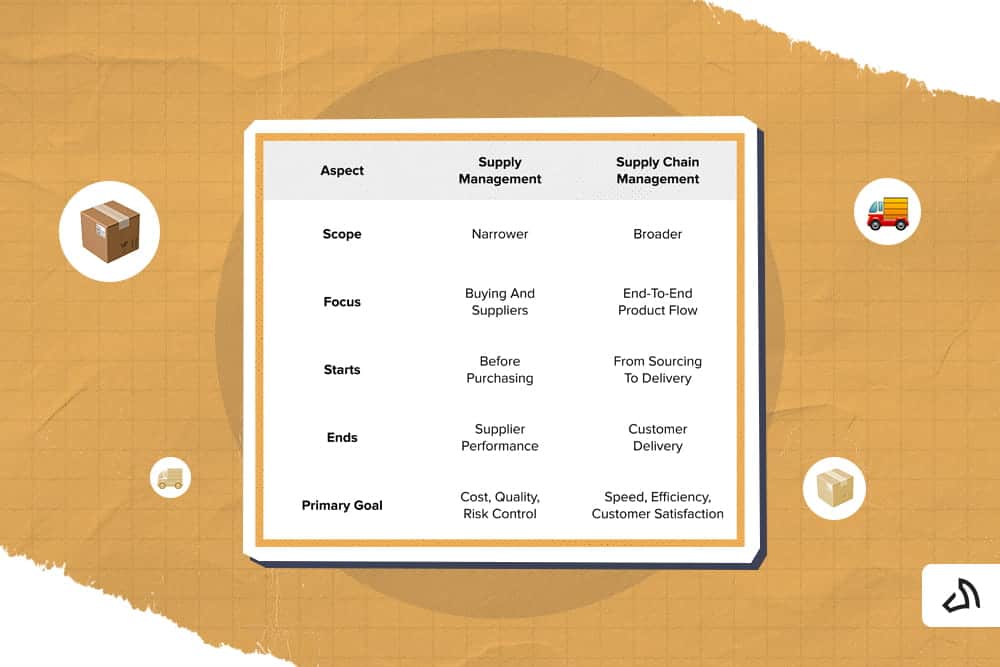
It might confuse you a bit because we often interchange these terms. However, supply management and supply chain management are distinct.
Supply Management is when you source, procure, and build relationships with suppliers. On the other hand, Supply Chain Management covers the entire flow of goods, from raw materials to final delivery to customers.
To simplify this explanation:
Think of supply management as a subset of supply chain management. It deals specifically with the upstream side (suppliers and purchasing). Meanwhile, the latter oversees the full lifecycle of a product.
Now, we have understood the difference between the two terms. Let's discuss the core pillars of the supply management system:
Strategic sourcing is not just about the cost of production. It also involves identifying and selecting suppliers based on long-term value. Some of the factors you need to consider are:
It may sound complicated at first. But this approach ensures stronger partnerships and better cost efficiency over time.
Similar Read: How to Overcome Market Saturation by 30% in 101 Days

Procurement refers to the process of purchasing goods and services. It includes:
Improving the structure of the procurement process will lead to consistency, transparency, and cost control.

Supplier relationship management (SRM) is all about building and maintaining strong partnerships with vendors. Don't just treat them as someone you'll work with one time. Instead, think of them as partners to collaborate with for long-term success, and not just a simple trade agreement.
As you foster strong relationships, you can improve the business's:

This pillar goes beyond simply cutting costs. It's about maximizing value while maintaining efficiency. Every business sector considers everything that is money-related, including:
The goal is to balance cost savings with quality and performance.
One thing to remember when operating a business is that nothing is perfect. Things can go wrong. There will be supply disruptions, regulatory changes, and supplier failures. And all of these can significantly affect operations and dismantle the trust you have already established.
Risk and compliance management ensure that businesses have enough preparation if and when these challenges happen, including:
Proactive risk management helps maintain stability even in uncertain times.
Similar Read: Route Insurance: The Benefits to Online Sellers
To make it more understandable, here's an example:
Let's create a scenario. You're an eCommerce business selling skincare products.
By applying these steps, the business ensures smooth operations, competitive pricing, and satisfied customers.
Again, supply management is not just about purchasing. It's a strategic function that directly impacts a company's profitability and efficiency. Businesses that invest in robust supply management practices are better able to handle market changes, reduce costs, and deliver consistent value to customers.
Good supply management doesn't end at sourcing. Stallion, Canada's leading 3PL partner, handles the rest.
We provide storage, shipping, and cross-border fulfillment, so your operations run smoothly. You can guarantee that your customers get their orders on time.
See how Stallion handles fulfillment and shipping for Canadian e-commerce sellers — book a free consultation today.

Jose is Stallion's Senior Business Analyst. He helps improve the company’s shipping processes, works closely with delivery partners, and looks at shipping data to find the best prices for our customers. Outside of work, Jose has a passion for running, regularly completing 5k and 10k runs, with the goal of running a full marathon in the near future.

Can our fellow Torontonians relate?
-
#smallbusiness #business #entrepreneur #socialmedia #shipping #ecommerce #canadianecommerce #shopify #poshmark #b2b #saas #etsy #ebay #canada #canadiansmallbusiness #shoplocalcanada #entrepreneur
#toronto

Here’s your quick hassle free shipping from 🇨🇦 to 🇺🇸 as a business owner!
-
Any questions?! Leave them 👇🏻 and save this video so you don’t forget!
-
#smallbusiness #business #entrepreneur #socialmedia #shipping #ecommerce #canadianecommerce #shopify #poshmark #b2b #saas #etsy #ebay #canada #canadiansmallbusiness #shoplocalcanada #entrepreneur
Meet @drinkbenny a 🇨🇦 female founded energy drink brand! Instead of focusing on their products, they’re taking a unique approach by hosting in person events in different Canadian cities to offer an experience for their community 🧡
-
What are your thoughts on in person events? 💭
-
#smallbusiness #business #entrepreneur #socialmedia #shipping #ecommerce #canadianecommerce #shopify #poshmark #b2b #saas #etsy #ebay #canada #canadiansmallbusiness #shoplocalcanada #entrepreneur
Do you know the difference between DDU and DDP when shipping internationally 🌏 ?
-
Questions? Leave them below! 👇🏻
-
#smallbusiness #business #entrepreneur #socialmedia #shipping #ecommerce #canadianecommerce #shopify #poshmark #b2b #saas #etsy #ebay #canada #canadiansmallbusiness #shoplocalcanada #entrepreneur
Here’s a quick hack to save time from choosing multiple postage options
↪️ Turn on the lowest postage rate automation to save you time!
-
Questions? Leave them below! 👇🏻
-
#smallbusiness #business #entrepreneur #socialmedia #shipping #ecommerce #canadianecommerce #shopify #poshmark #b2b #saas #etsy #ebay #canada #canadiansmallbusiness #shoplocalcanada #entrepreneur