Shipping to Canada
Save up to 50%

Shipping to the U.S.
Save up to 75%

Shipping Internationally
Save up to 85%

Same Day Delivery
Across the GTA

Returns
Lowest rate on the market
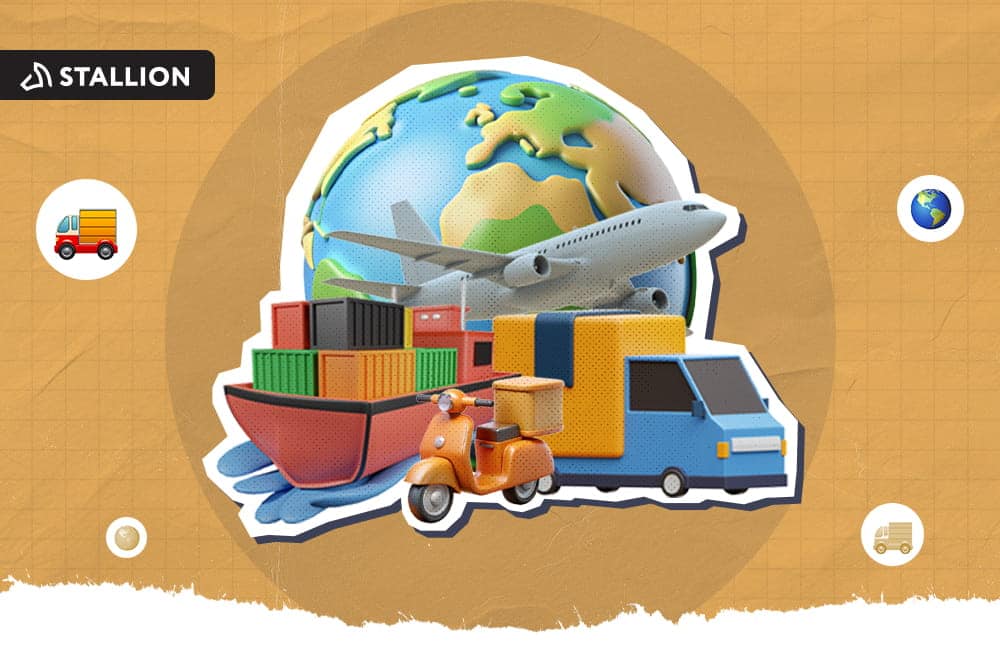
Running an online business is more than just selling a product. Behind every successful order is a system that moves products from suppliers to warehouses and, finally, to your customer's doorstep. That's what supply chain logistics is.
If you've ever dealt with late deliveries, rising shipping costs, or inventory headaches, this guide is for you. Let's break it all down in simple terms:
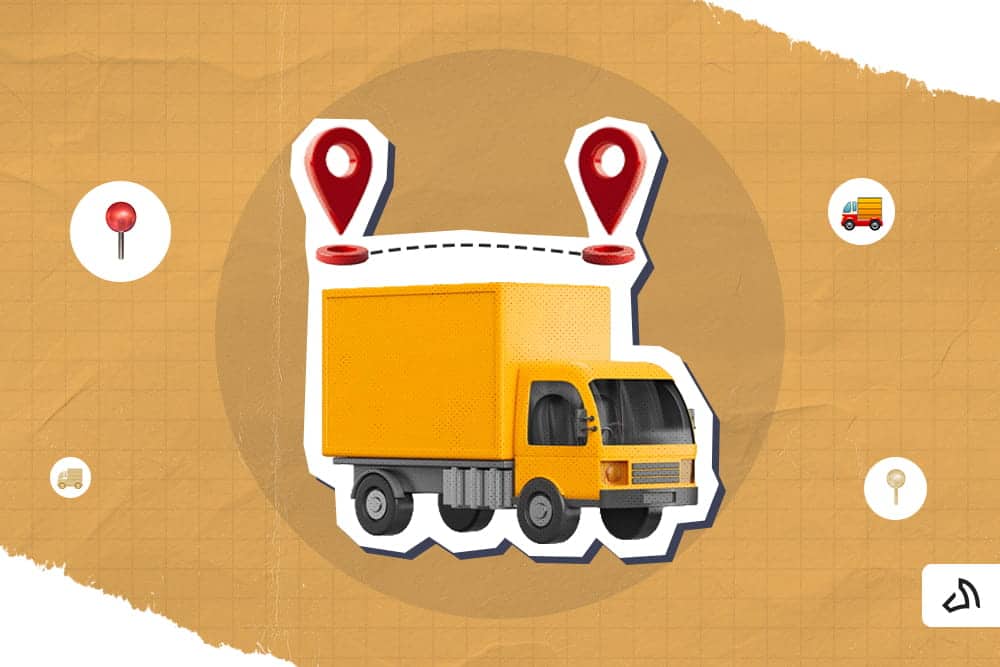
Logistics is a part of supply chain management. It mainly focuses on moving, storing, and delivering products. To differentiate them, supply chain management looks at the big picture. Logistics handles the day-to-day actions that keep things running smoothly.
Here's what it does:
If logistics breaks down, the entire supply chain feels it.
Remember, not all logistics work the same. Depending on where products go and what stage they are in, you can group them into different types. Let's explore the main ones sellers typically deal with:
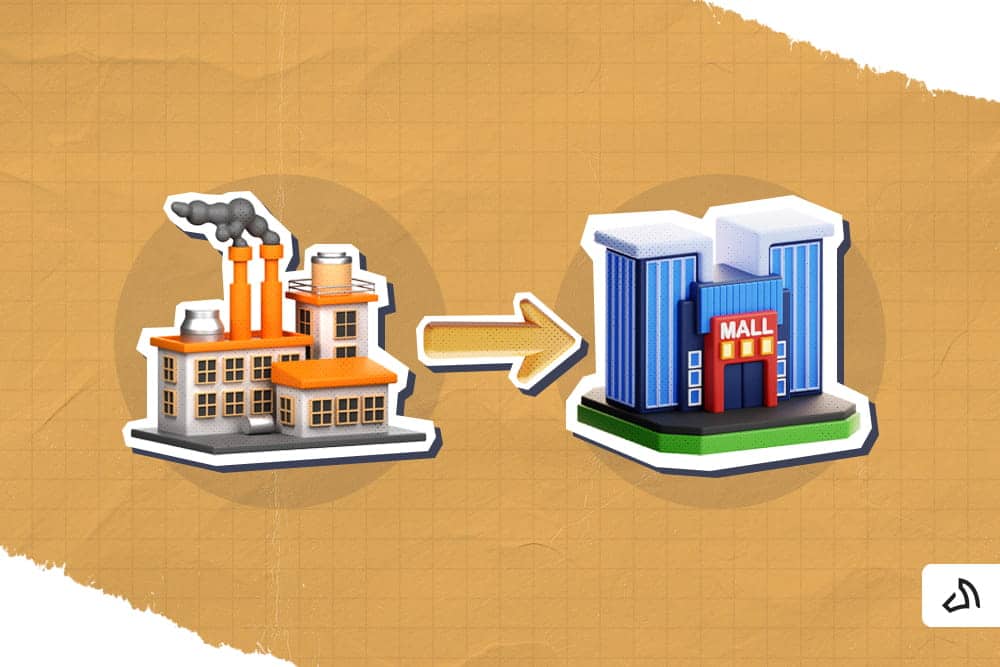
It covers everything that happens before selling the products. This type includes receiving goods from suppliers, transporting them to warehouses, and checking inventory.
For sellers, good inbound logistics means fewer delays, lower costs, and better stock planning.
This type focuses on delivering orders to customers. It includes order picking and packing, shipping, and last-mile delivery. Fast and reliable outbound logistics help Canadian sellers compete with big-name brands and marketplaces.
It handles returns, exchanges, and refunds. While returns are frustrating, they're a normal part of eCommerce. An efficient, smooth return process builds trust and keeps customers coming back, even when things don't go as planned.
It includes numerous processes within the logistics industry, including:
For many Canadian online sellers, using a 3PL is the easiest way to scale. You don't have to hire personnel staff or rent warehouse space.
Similar Read: 3PL vs 4PL: Key Differences, Benefits, and How to Choose the Right One
Logistics comprises several key components that work together to keep orders moving smoothly and efficiently. Let's explore each component and understand how they help the supply chain:
It covers how products move, from suppliers to warehouses and from warehouses to customers. It includes:
These elements make it a key area for anyone pursuing a logistics career. Additionally, strong transportation management helps reduce shipping costs and avoid delays.
Warehousing involves storing inventory safely and efficiently. In Canada, having warehouses close to major cities or border points can speed up delivery times. Think of it as a well-planned warehousing program.
Good storage systems also reduce lost or damaged products.
Inventory management tracks how much you have and where you can find it. This makes it a core professional practice for growing eCommerce businesses.
Just think of it this way. Too much inventory ties up cash, while too little leads to missed sales. Real-time inventory tracking helps sellers stay balanced and prepared.
Order fulfillment is the process of picking, packing, and shipping customer orders. It's a core skill often covered in many training or certificate programs. Speed and accuracy matter here.
Fast fulfillment improves customer satisfaction and reduces support issues.
Materials handling includes how you move products within a warehouse. It uses shelves, bins, conveyors, or equipment to provide better control and support effective materials management.
Efficient handling saves time, lowers labour costs, and reduces errors.
Packaging not only protects products during shipping. It also represents your brand. Smart packaging can reduce shipping costs while still keeping items safe. This is a growing requirement from competitive eCommerce sellers.
Eco-friendly packaging is also becoming more important to Canadian customers.
Related Post: Dunnage 101: Definition, Purpose, and Types
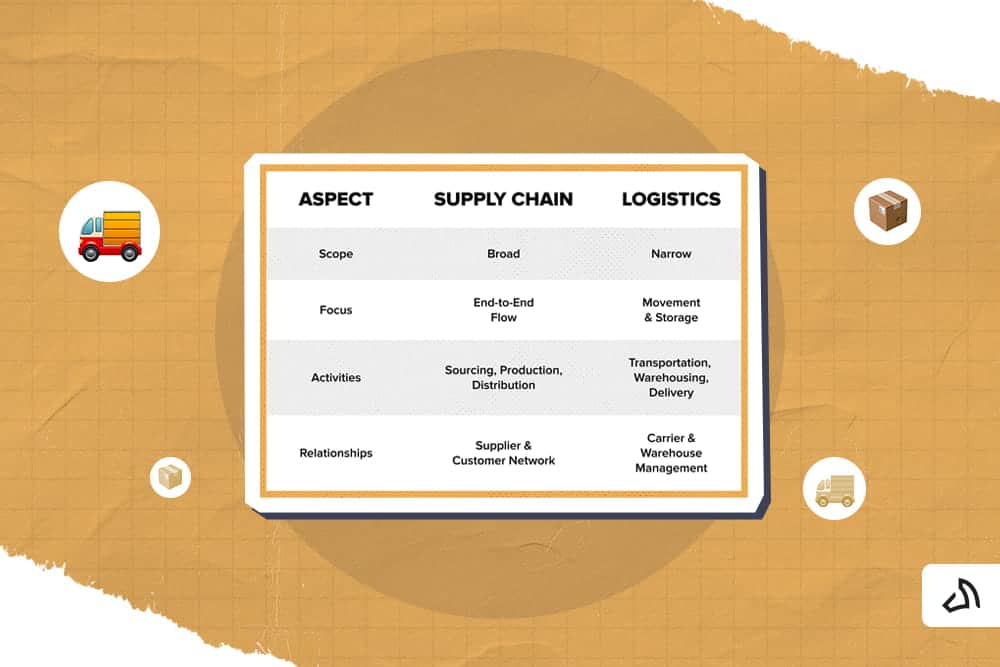
You may often hear "supply chain" and "logistics" used interchangeably, as if they mean the same thing. Surprisingly, they don't. Understanding the differences helps sellers make better planning and operational decisions. Let's explore how different one is from the other:
Supply chain covers the entire journey, from raw materials at the source to final delivery. Logistics focuses on movement and storage within that journey.
Supply chain planning is strategic and long-term. It helps businesses develop sustainable processes. Logistics is more operational and day-to-day.
Supply chain activities include sourcing, manufacturing, and planning. This often requires long-term coordination. Meanwhile, logistics activities include shipping, warehousing, and fulfillment.
Supply chain management involves different parties across the broader market, including:
On the other hand, logistics mainly works with carriers, warehouses, and fulfillment partners.
Canadian sellers face new challenges every year, from rising costs to staffing issues. The good news? There are practical solutions to manage these problems. Let's see how you can resolve each issue:
Weather events, global conflicts, and port delays are some of the factors that can disrupt key parts of the supply chain.
Solutions:
To reduce the impact of disruptions, sellers can:
These strategies can also help maintain consistent delivery time.
Transportation costs continue to rise due to fuel prices, labour shortages, and carrier rate increases. These higher costs can quickly cut into profit margins. Sad to say, the most affected ones are the small and mid-sized Canadian sellers.
Shipping across provinces or into the US can make cost control even more challenging.
Solutions:
Unfortunately, we cannot 100% avoid the rising transportation costs. However, we can put in place strategies to ensure we're not significantly affected by the situation.
For example, sellers can choose regional carriers because they operate within specific zones. It can help you ship short distances and avoid premium long-haul pricing. This way, you can reduce per-package costs while still meeting delivery expectations.
Another step you can take is to use fulfillment warehouses. Shipping from these warehouses closer to customers, even when serving global markets, shortens delivery zones. Fewer zones mean lower shipping costs and faster delivery times. It can also lead to less exposure to fuel surcharges tied to long-distance transport.
Without clear visibility, it's hard to know where inventory is, right? It can also be challenging to identify when shipments will arrive or where delays are happening. This lack of information can lead to missed sales and poor communication.
For growing eCommerce brands, visibility becomes more important as order volume increases.
Solutions:
You can use logistics technology that offers real-time tracking. This helps you see exactly where products are at any point in the supply chain. You'll know whether they are in transit, at a warehouse, or ready for delivery. It eliminates uncertainty and helps identify delays or bottlenecks as they happen.
If you're a growing business, you can take advantage of a centralized dashboard. It can help you stay informed and support better decision-making. A dashboard can consolidate all supply chain data in one place. As a result, it is easier to monitor multiple shipments, carriers, and fulfillment locations at a glance.
Sellers no longer have to rely on fragmented reports or manually checking with multiple partners. This reduces blind spots in operations.
Inventory management is a constant balancing act. Overstocking ties up cash and storage space. Meanwhile, running out of stock means missed sales and unhappy customers. Seasonal demand and promotions can further complicate inventory planning for sellers.
Solutions
Last-minute decisions will only make you feel overwhelmed. Thus, accurate demand forecasting helps you plan in advance. By predicting how much product customers will order, sellers can stock the right quantities ahead of time. This prevents both overstocking and understocking.
Automated reorder points and inventory alerts can also simplify your inventory management tasks. It takes the guesswork out of replenishment.
Additionally, alerts notify sellers and automatically trigger reorders. This helps maintain optimal inventory levels without constant manual checks.
Sustainability is becoming a bigger priority for both sellers and customers. More Canadians expect brands to reduce waste and lower their environmental impact. Ignoring sustainability can affect brand trust and long-term growth.
Solutions
Sellers can apply a strategy like switching to recyclable packaging. This action reduces waste going to landfills and promotes a circular economy. It ensures that customers can reuse or repurpose the packaging, aligning with eco-friendly practices.
Partner with a shipping company with optimized delivery routes or local fulfillment centers. Efficient delivery routes minimize travel distances and fuel usage.
Similarly, storing inventory closer to customers reduces shipping distances. This results in less fuel consumption, fewer emissions, and faster deliveries.
Warehousing and logistics operations across Canada are dealing with labour shortages. Sadly, this can affect warehouse operations. It slows down order processing, increases errors, and raises operating costs.
High turnover also makes it harder to maintain consistent service levels.
Solutions
Partnering with a 3PL allows sellers to rely on trained teams without managing their own staffing. Outsourcing fulfillment shifts operational responsibility to trained teams with the expertise and capacity.
Sellers don't have to recruit, train, or manage staff constantly. This ensures operational continuity and reduces strain on internal teams.
Additionally, using external teams or automation means that people with the right skill sets handle the tasks. It minimizes errors, improves performance, and allows in-house staff to focus on higher-value tasks. In return, this step further boosts retention.
As supply chains become more digital, cybersecurity threats are increasing. Cyberattacks can target order systems, inventory platforms, and customer data. These issues can put your entire organization at risk.
A security breach can disrupt operations and damage customer trust.
Solutions
Using secure platforms reduces risk for every purchase. This protects sensitive data with strong encryption and security protocols. It ensures that your customers' information, payment details, and order histories are free from breaches.
In addition, work with logistics partners that follow strict data security standards. This ensures that customer and operational data remain protected throughout the supply chain. They also prevent leaks or breaches that could occur during order fulfillment and shipping.
Procurement is one of the earliest steps in the SCMP designation. It sets the foundation for everything that follows. Let's see how this critical course works:
Supply chain and logistics keep your business running efficiently. They affect:
For sellers, an efficient process can be the difference between struggling to keep up and scaling with confidence.
Managing logistics on your own? Why not partner with Canada's leading 3PL, Stallion!
We help Canadian sellers simplify fulfillment with:
We don't mind if you're just starting out or scaling fast. Stallion will make your supply chain management easier, more affordable, and more efficient.
Ship smarter, reduce stress, and focus on growing your business, with Stallion by your side.

Jose is Stallion's Senior Business Analyst. He helps improve the company’s shipping processes, works closely with delivery partners, and looks at shipping data to find the best prices for our customers. Outside of work, Jose has a passion for running, regularly completing 5k and 10k runs, with the goal of running a full marathon in the near future.
Can our fellow Torontonians relate?
-
#smallbusiness #business #entrepreneur #socialmedia #shipping #ecommerce #canadianecommerce #shopify #poshmark #b2b #saas #etsy #ebay #canada #canadiansmallbusiness #shoplocalcanada #entrepreneur
#toronto

Here’s your quick hassle free shipping from 🇨🇦 to 🇺🇸 as a business owner!
-
Any questions?! Leave them 👇🏻 and save this video so you don’t forget!
-
#smallbusiness #business #entrepreneur #socialmedia #shipping #ecommerce #canadianecommerce #shopify #poshmark #b2b #saas #etsy #ebay #canada #canadiansmallbusiness #shoplocalcanada #entrepreneur
Meet @drinkbenny a 🇨🇦 female founded energy drink brand! Instead of focusing on their products, they’re taking a unique approach by hosting in person events in different Canadian cities to offer an experience for their community 🧡
-
What are your thoughts on in person events? 💭
-
#smallbusiness #business #entrepreneur #socialmedia #shipping #ecommerce #canadianecommerce #shopify #poshmark #b2b #saas #etsy #ebay #canada #canadiansmallbusiness #shoplocalcanada #entrepreneur
Do you know the difference between DDU and DDP when shipping internationally 🌏 ?
-
Questions? Leave them below! 👇🏻
-
#smallbusiness #business #entrepreneur #socialmedia #shipping #ecommerce #canadianecommerce #shopify #poshmark #b2b #saas #etsy #ebay #canada #canadiansmallbusiness #shoplocalcanada #entrepreneur
Here’s a quick hack to save time from choosing multiple postage options
↪️ Turn on the lowest postage rate automation to save you time!
-
Questions? Leave them below! 👇🏻
-
#smallbusiness #business #entrepreneur #socialmedia #shipping #ecommerce #canadianecommerce #shopify #poshmark #b2b #saas #etsy #ebay #canada #canadiansmallbusiness #shoplocalcanada #entrepreneur