Shipping to Canada
Save up to 50%

Shipping to the U.S.
Save up to 75%

Shipping Internationally
Save up to 85%

Same Day Delivery
Across the GTA

Returns
Lowest rate on the market
A surprise FedEx duty payment is one of the fastest ways to lose a customer. It can also quietly lower your profit margins if you don't plan for it. This guide explains how FedEx duty payments work in Canada and how to pay for them. We will also discuss how to structure shipping so duties stop cutting into the money that you make.
Every package that crosses out of Canada through FedEx can trigger duties, taxes and service charges. Understanding what each one actually covers is the first step to controlling them.
Bundling duties and taxes into a single line item on customer invoices might seem simpler. However, itemizing them provides greater transparency and helps avoid confusion at checkout.
Itemize these charges at checkout. They not only ensure international buyers see an accurate landed price. They also protect your business from unexpected delivery fees.
FedEx charges fees when handling customs clearance. These typically include:
These fees can add up quickly on lower-value shipments. Sometimes, they even exceed the duty amount itself.
The delivery term selected at shipping determines who handles duties and when they pay them.
In DDP (Delivered Duty Paid), the shipper (in this case, the seller) pays the duties and taxes upfront. It can also mean the customer pays them at checkout so they receive the package with no balance due. Either way, it indicates that they should settle the charges first before the shipment begins. This creates a smoother delivery experience and reduces refused shipments.
As for DDU (Delivered Duty Unpaid), also called DAP (Delivered at Place), customers will pay the duties, taxes, and other related fees upon delivery. While it's easier for the sellers, this creates a negative chain reaction. Sometimes, customers expect to just receive their package.
They don't anticipate that they still have to pay for something else. The unexpected bill can catch them off guard. And this surprise can cause them to refuse their packages and, eventually, return them to the seller.
Similar Read: DDU vs. DDP: Which Shipping Method Should You Use?
Canadian sellers have two main ways to pay duties owed on FedEx shipments:
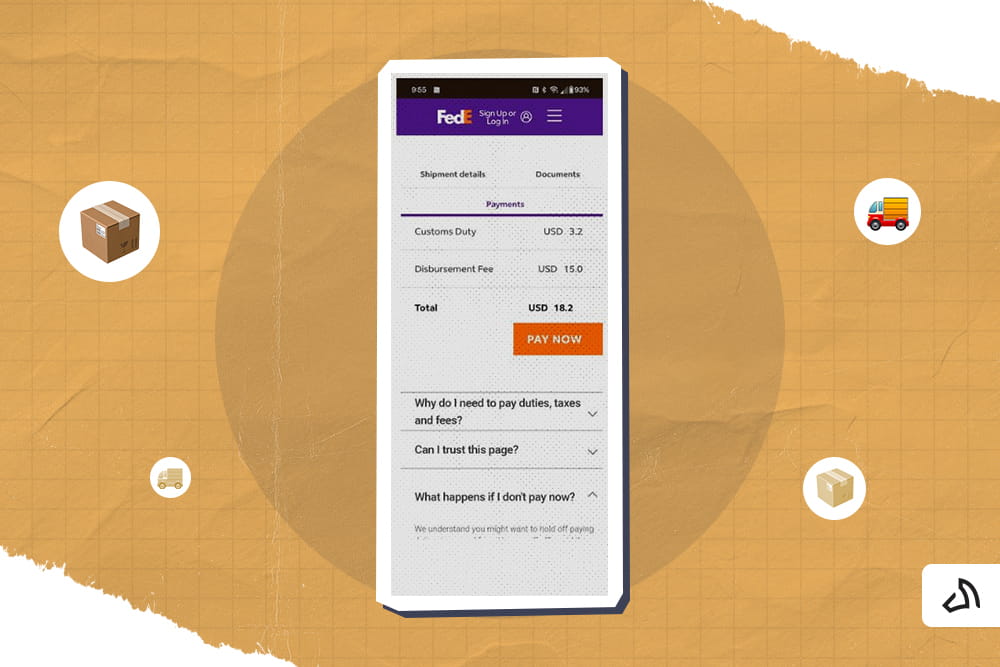
FedEx offers an online payment portal where sellers can look up outstanding duty and tax invoices. They can use the shipment's tracking number to do so and pay directly. This is the fastest option for one-off payments and clearly shows how much they owe and why.
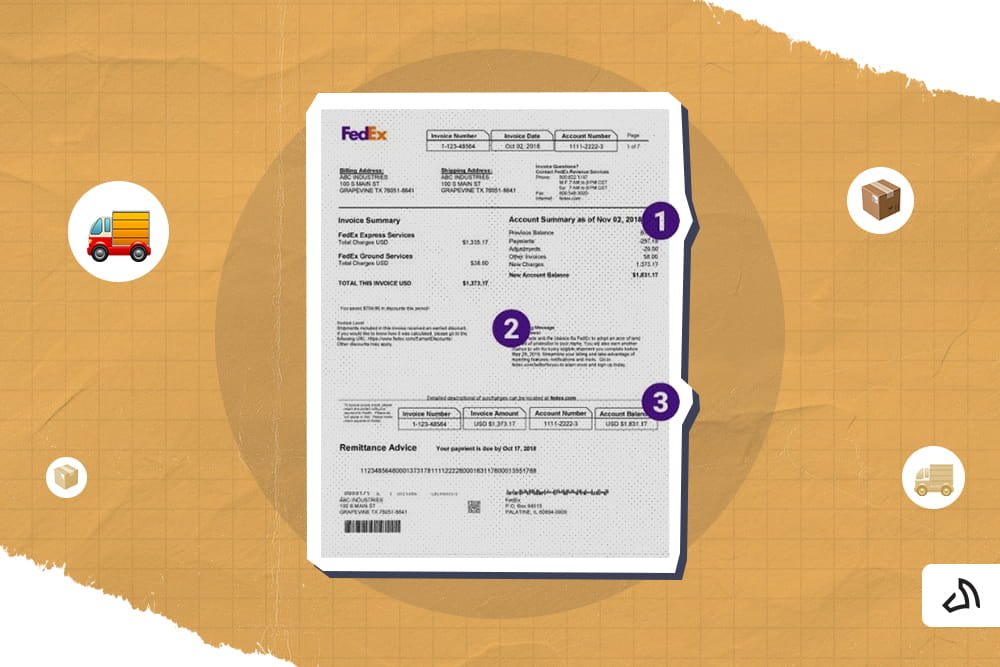
FedEx Billing Online offers a feature that helps Canadian sellers who ship regularly. They consolidate duty and tax invoices with freight charges under a single account number.
It's easier to cross-check shipping costs and set up recurring payment methods. Sellers can also assign specific invoices to a FedEx account for tracking. If they want, they can also route duty invoices to a distinct account from freight charges to keep them separate for accounting purposes.
De minimis thresholds set the value below which a shipment is exempt from duties, taxes, or both. These thresholds differ by trade lane and where your inventory comes from. So, it helps to know where your shipments fall before pricing them out.
Because of CUSMA, shipments moving between Canada, the US, and Mexico have historically carried preferential thresholds. However, that changed because of the suspension of Section 321.
To those who don't know, this rule used to let shipments valued at 800 USD or less enter the United States duty-free without a formal customs entry. But the new rule has suspended that exemption for shipments from every country since August 29, 2025.
The US Customs and Border Protection (CBP) made the suspension indefinite through two interim final rules. The effectivity started on June 24, 2026, for shipments outside the postal network and July 24, 2026, for mail. So, regardless of the country of origin, commercial shipments valued at 800 USD or less now owe applicable duties, taxes, and fees.
And Congress didn't stop there. Following the initial suspension on August 29, 2025, CBP interim final rules made the restriction indefinite. Before the One Big Beautiful Bill Act of 2025 ultimately repealed Section 321 for all commercial shipments by statute, effective July 1, 2027.
In practice, this means every parcel sent to a US customer now needs a formal or informal entry and duty payment, regardless of order value. Orders that used to clear free under 800 USD no longer get a pass.
On CUSMA-eligible shipments moving the other direction, values at 40 CAD or less remain duty- and tax-free. Meanwhile, values between 40 USD and 150 USD stay duty-free but still carry GST/HST.
Also Read: 2026 U.S. Tariff Updates
Shipments coming from outside Canada, the US, and Mexico still fall under the standard de minimis rule:
Knowing where your product sourcing falls on this scale helps you build more accurate landed cost estimates before you reach checkout
Duties and ancillary fees are costs you cannot simply disregard. These charges are here to stay. But you don't have to worry, because you can protect your profits.
If a customer refuses to pay duties and taxes owed on a DDU shipment, FedEx will typically hold the package and attempt to contact the recipient. If the payment isn't settled within a set window, FedEx will return the package to the seller. They generally cover return freight and may still owe the original duties and fees FedEx advanced on the shipment's behalf.
If sellers believe the assessment of a shipment has the wrong duty rate or has an incorrect HS code classification, they can file a request for re-determination with the relevant customs authority. They can cite the invoice number and support the claim with documentation showing the correct classification and country of origin.
Yes. When a customer returns a shipped item, businesses may be eligible for a duty drawback or a refund of duties paid. They only have to properly document the return and file it within the applicable time limit. This is separate from any GST/HST adjustment, which they handle through the regular tax return process.
Yes. Shipments subject to review by US government agencies like the FDA or USDA/APHIS often incur additional inspection or processing fees. These charges are separate from standard duties and brokerage fees and typically apply to regulated categories such as cosmetics, health and beauty products, supplements, and agricultural goods. PGA holds can also cause delivery delays beyond standard clearance times.
FedEx duty payments don't have to cut into margins or frustrate customers. Understanding everything related to it puts you back in control.
The suspension of Section 321 raises the stakes on getting this right. Duties on US-bound shipments are no longer a concern reserved for higher-value orders, since every parcel now carries that cost. With the right tools, sellers can turn what feels like an unpredictable cost centre into a manageable, budgeted part of cross-border shipping.
Canadian sellers don't just eliminate duty surprises and avoid padded brokerage fees. They can also scale cross-border and international shipping. Stallion combines deeply discounted carrier rates with automated customs handling.
And the result? We keep your margins intact! But here's more of what we can offer:
Stop losing margin to brokerage markups and duty surprises. Create a free Stallion account and get discounted courier rates plus automated DDP setup built in from your first shipment.

Jose is Stallion's Senior Business Analyst. He helps improve the company’s shipping processes, works closely with delivery partners, and looks at shipping data to find the best prices for our customers. Outside of work, Jose has a passion for running, regularly completing 5k and 10k runs, with the goal of running a full marathon in the near future.
Can our fellow Torontonians relate?
-
#smallbusiness #business #entrepreneur #socialmedia #shipping #ecommerce #canadianecommerce #shopify #poshmark #b2b #saas #etsy #ebay #canada #canadiansmallbusiness #shoplocalcanada #entrepreneur
#toronto

Here’s your quick hassle free shipping from 🇨🇦 to 🇺🇸 as a business owner!
-
Any questions?! Leave them 👇🏻 and save this video so you don’t forget!
-
#smallbusiness #business #entrepreneur #socialmedia #shipping #ecommerce #canadianecommerce #shopify #poshmark #b2b #saas #etsy #ebay #canada #canadiansmallbusiness #shoplocalcanada #entrepreneur
Meet @drinkbenny a 🇨🇦 female founded energy drink brand! Instead of focusing on their products, they’re taking a unique approach by hosting in person events in different Canadian cities to offer an experience for their community 🧡
-
What are your thoughts on in person events? 💭
-
#smallbusiness #business #entrepreneur #socialmedia #shipping #ecommerce #canadianecommerce #shopify #poshmark #b2b #saas #etsy #ebay #canada #canadiansmallbusiness #shoplocalcanada #entrepreneur
Do you know the difference between DDU and DDP when shipping internationally 🌏 ?
-
Questions? Leave them below! 👇🏻
-
#smallbusiness #business #entrepreneur #socialmedia #shipping #ecommerce #canadianecommerce #shopify #poshmark #b2b #saas #etsy #ebay #canada #canadiansmallbusiness #shoplocalcanada #entrepreneur
Here’s a quick hack to save time from choosing multiple postage options
↪️ Turn on the lowest postage rate automation to save you time!
-
Questions? Leave them below! 👇🏻
-
#smallbusiness #business #entrepreneur #socialmedia #shipping #ecommerce #canadianecommerce #shopify #poshmark #b2b #saas #etsy #ebay #canada #canadiansmallbusiness #shoplocalcanada #entrepreneur