Shipping to Canada
Save up to 50%

Shipping to the U.S.
Save up to 75%

Shipping Internationally
Save up to 85%

Same Day Delivery
Across the GTA

Returns
Lowest rate on the market
Supply chain optimization in Canada isn't the same as in the US or other countries. Many challenges are unique to Canadian sellers and aren't experienced by sellers outside the country. But what bottlenecks slow down a Canadian business?
This guide answers that exact question. We'll also cover strategies to address them and the tools and metrics that keep a Canadian ecommerce operation running without surprises.
Supply chain optimization is more than just moving products from the supplier to your customer. You should complete the supply chain process without sacrificing reliability. It must reduce cost, time, and error rate.
In most markets, that comes down to picking a good carrier and a decent warehouse location. But in Canada, the market itself works against simple solutions.
The country has:
This means optimization here isn't just about copying a foreign provider's playbook. It requires solving for Canada-specific conditions.
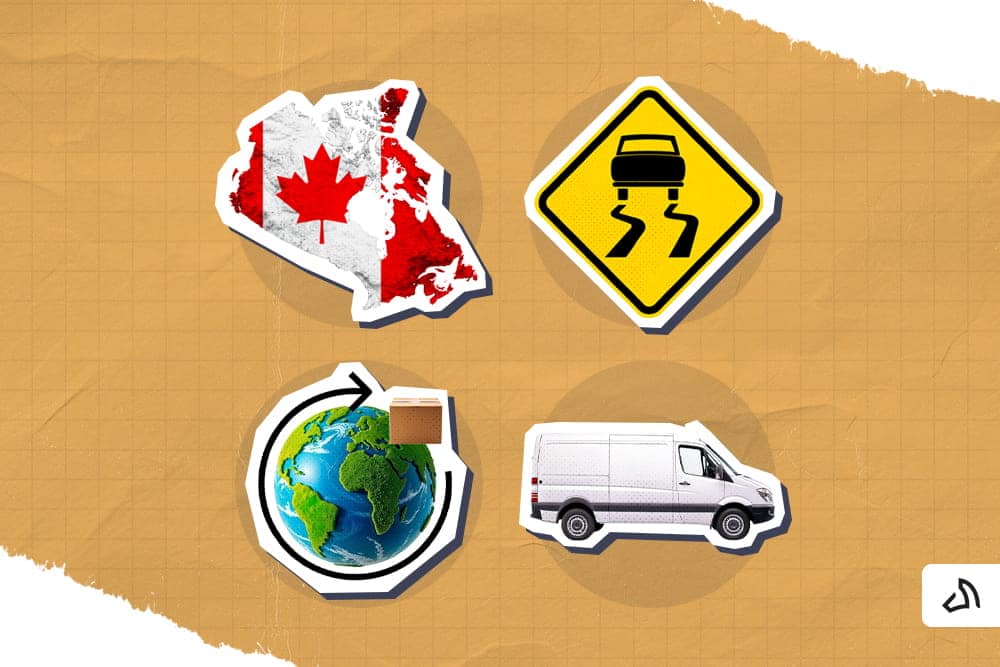
Before looking at solutions, though, it helps to understand what makes Canada different. Here are the four factors that show up in almost every problem Canadian sellers run into:
Canada is the second-largest country in the world in total area. However, most of its population lives in a narrow band along the southern border.
A fulfillment facility in Toronto can efficiently serve Ontario and Québec. But shipping to Alberta, British Columbia, or the Maritimes from that same location creates a bit of a challenge. Shipping to these locations takes more days and costs more.
A large share of Canadian ecommerce inventory comes from the US or overseas. Many Canadian sellers also sell to US buyers. This process all leads to one thing: the border.
Stock from the US or overseas needs to cross the border to reach your storage. On the other hand, if you're selling to US customers, orders also need to cross the border to reach American buyers. All of this brings customs paperwork, duties, and the risk of delays.
If you don't plan for this, you may treat customs as an afterthought instead of a cost centre that needs active management.
Being in the northern part of the globe also means winters are a bit harsher. Canadian winters affect road and air freight in ways that milder climates do not. Storms close highways, delay flights, and slow last-mile delivery, creating that supply chain disruption we don't want.
Ironically, these are the same months when order volume tends to be the highest. So, an approach that's working just perfectly fine in July may fall apart in December.
It's no secret that Canadian sellers have fewer carrier options than US-based stores. Canada Post, Purolator, and a few other names handle most parcels in the country. While this may reduce decision fatigue, it limits your ability to negotiate rates.
It also creates single points of failure during labour disruptions or peak season surges.
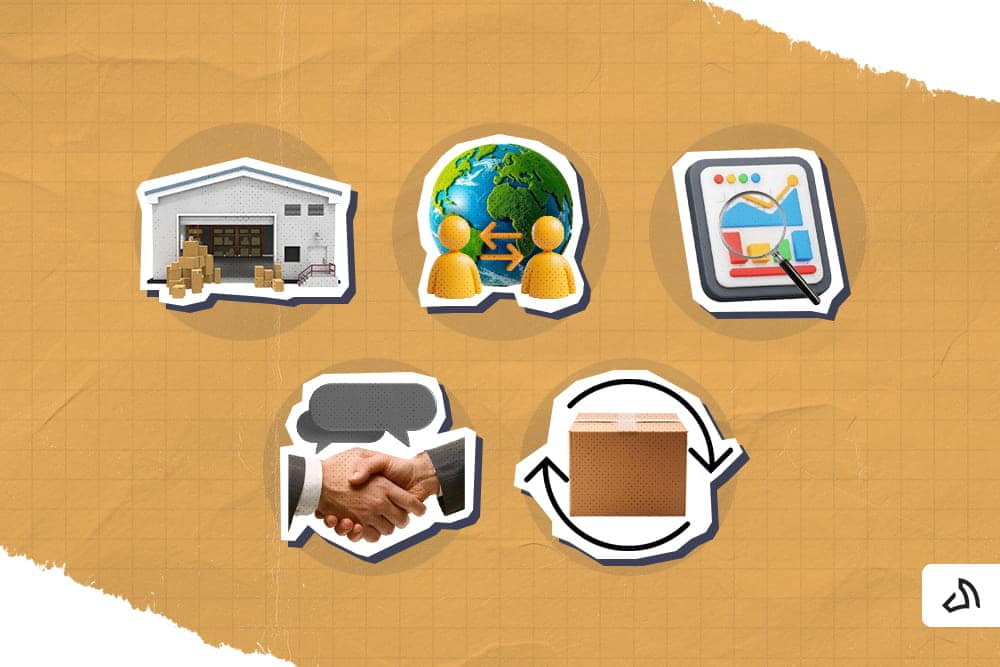
Now that you know the issues, the next step is to address them directly. Here are the five strategic ways to optimize your supply chain network:
Have your inventory distributed evenly across two or more storage facilities. Preferably, these should be close to major population clusters. Doing so cuts average delivery distance and transit time.
For this reason, many businesses place storage nodes near British Columbia, Ontario, and Québec. This distribution covers most of the country at a fraction of the cost of a full national network.
Work with brokers or partners who can handle customs documentation, duty calculation, and compliance. This reduces the chance that border authorities will hold up your shipment.
Classify products correctly under the right tariff codes ahead of time. It can save you time, avoid delays, and prevent unexpected charges later.
Place inventory where demand actually is. Matching inventory levels to regional demand reduces stockouts and the cost of moving inventory between locations after the fact. However, this requires forecasting based on regional historical order data. So, use a system that helps you see the data accurately.
As mentioned, one common point of failure is depending on a single carrier. Consider two or more carriers and negotiate rates based on shipment volume. This will protect you against service disruptions. It will also give you leverage to reduce shipping costs per order.
Choosing from so many carrier options can be overwhelming, but you can simplify it by using rate-shopping software. It can automate carrier selection for each order.
Many sellers brush return costs aside until the volume makes them hard to ignore. Have a clear returns process to ensure costs are predictable and keep returned inventory moving. Designate locations and create rules for restocking versus disposal to establish cohesive supply chain management.
Choosing how to fulfill orders is one of the biggest decisions you'll make when you optimize supply chain performance. Here are your options, what they are best for, how much they cost, and how scalable they are:
The table below compares the three main models side by side to show where each one fits:
| Criteria | In-House Fulfillment | Canadian 3PL Partner | Hybrid Model |
| Best For | Early-stage (<100 orders/mo) | High volume or cross-border shipments | Seasonal or multi-channel platforms |
| Cost Structure | High fixed costs (leases) | Variable unit costs | Flexible operational costs |
| Scalability | Limited by warehouse space | Instant regional expansion | Highly adaptable |
But remember: none of the strategies above will work well without supporting software. These three categories cover the tools most Canadian sellers need to run fulfillment without manual issues:
An inventory management or ERP system can track stock levels across every warehouse location in real time. Having one prevents a business from overselling. But more importantly, it shows which products need to be reordered or redistributed. This kind of system is the backbone of a modern supply chain. It is the single source of truth that every other tool pulls from.
While the features can vary, shipping software all does the same thing: automate tasks for you. It can pull orders directly from a store platform, compare carrier rates, and automatically generate labels.
These functions remove manual work and reduce the error rate that comes with entering shipment data by hand. It also keeps delivery times aligned with customer demand, rather than whatever carrier a warehouse team defaults to.
Order and inventory data stay in sync in a directly interconnected store, 3PL, and inventory system, even without manual updates. This makes fulfillment easier to manage and lets sellers focus on other tasks that help the business scale.
Additionally, while the result is indirect, you can also clearly see supplier performance. It gives sellers a record to check if the supplier delivers what they said, when they said, rather than taking the 3PL's word for it.
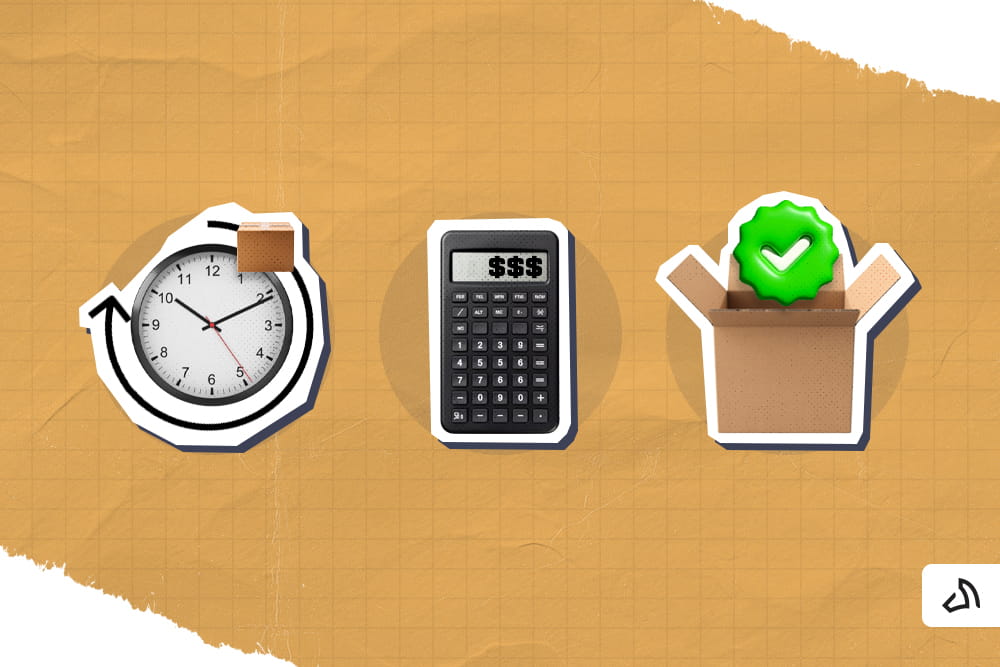
Optimization only matters if you can measure it. Applying supply chain optimization techniques without tracking them is really just guessing. These four metrics give you real supply chain visibility into whether a supply chain is actually improving:
It depends on local province rules. However, storing inventory in a province can create nexus for provincial sales tax purposes. In particular, British Columbia, Manitoba, and Saskatchewan have their own PST rules that also cover the inventory in these provinces. However, they only apply when a business has a physical presence. Sellers expanding into multi-node fulfillment should confirm registration requirements with a tax professional before storing inventory in a new province.
Sellers should finalize peak season planning by early fall, generally by September. This accounts for carrier capacity bookings, inventory lead times, and any warehouse staffing needs. Waiting until November leaves little room to correct for supply chain disruptions. It will also be difficult to adjust the rate increases set earlier in the year. Starting early is part of optimizing the supply chain, not reacting once problems appear.
Delays at ports such as Vancouver or Montreal push back the arrival of inventory that hasn't cleared customs, creating stockouts at domestic fulfillment centers even when demand forecasting is accurate. This exposes a weak point in a supply chain's import routes that few sellers plan around. Holding a buffer stock for high-demand items, a form of inventory optimization, reduces exposure for sellers who rely on a single port of entry.
There are various ways to reduce both environmental impact and shipping costs. You can consolidate shipments to reduce partial loads, switch to right-sized packaging to cut dimensional weight charges, and choose carriers with efficient regional routes. These changes reflect best supply chain optimization thinking. Once you handle it well, environmental and cost goals rarely conflict.
Canadian supply chain optimization is not a single fix. It is a combination of:
Built around the specific conditions of shipping across Canada and across the border. Sellers who treat these as one connected system, rather than separate problems, see real cost and delivery-time improvements.
The optimization solutions that work are rarely the most complex ones. Apply them consistently as part of an ongoing supply chain optimization process, not just a one-time project.
Stallion is a Canadian shipping and 3PL fulfillment platform built to handle the exact challenges covered in this guide. We provide the solutions you need, from carrier access to cross-border movement. It's designed to support an entire supply chain design, not just one piece of it.
Here's how it supports Canadian sellers directly:
Stallion gives Canadian sellers access to discounted rates across multiple carriers, up to 50%. Beyond that, we automatically compare rates on every order, so shipments go out at the lowest available cost.
Built-in rate shopping is one of the simplest best practices a seller can put in place. No added manual work needed.
Stallion handles cross-border shipping to the US directly. So, sellers don't need to piece together their own customs and carrier setup for US-bound orders.
With a US-based 3PL fulfillment facility, our team there can pick, pack, and ship to American customers from within the US. No need to cross the border on every single order. That cuts transit time and avoids the extra customs handling that comes with shipping each order internationally.
We're taking one of the more error-prone supply chain activities off a seller's plate and bringing down costs as order volume to the US grows.
Stallion connects directly with major ecommerce platforms. That's why orders, inventory, and shipping data stay synced without manual entry. Sellers can manage fulfillment from one place. It functions as supply chain optimization software without requiring a separate system to manage on top of it.
Get started with Stallion today and see how much simpler Canadian and cross-border fulfillment can be.

Jose is Stallion's Senior Business Analyst. He helps improve the company’s shipping processes, works closely with delivery partners, and looks at shipping data to find the best prices for our customers. Outside of work, Jose has a passion for running, regularly completing 5k and 10k runs, with the goal of running a full marathon in the near future.

Can our fellow Torontonians relate?
-
#smallbusiness #business #entrepreneur #socialmedia #shipping #ecommerce #canadianecommerce #shopify #poshmark #b2b #saas #etsy #ebay #canada #canadiansmallbusiness #shoplocalcanada #entrepreneur
#toronto

Here’s your quick hassle free shipping from 🇨🇦 to 🇺🇸 as a business owner!
-
Any questions?! Leave them 👇🏻 and save this video so you don’t forget!
-
#smallbusiness #business #entrepreneur #socialmedia #shipping #ecommerce #canadianecommerce #shopify #poshmark #b2b #saas #etsy #ebay #canada #canadiansmallbusiness #shoplocalcanada #entrepreneur
Meet @drinkbenny a 🇨🇦 female founded energy drink brand! Instead of focusing on their products, they’re taking a unique approach by hosting in person events in different Canadian cities to offer an experience for their community 🧡
-
What are your thoughts on in person events? 💭
-
#smallbusiness #business #entrepreneur #socialmedia #shipping #ecommerce #canadianecommerce #shopify #poshmark #b2b #saas #etsy #ebay #canada #canadiansmallbusiness #shoplocalcanada #entrepreneur
Do you know the difference between DDU and DDP when shipping internationally 🌏 ?
-
Questions? Leave them below! 👇🏻
-
#smallbusiness #business #entrepreneur #socialmedia #shipping #ecommerce #canadianecommerce #shopify #poshmark #b2b #saas #etsy #ebay #canada #canadiansmallbusiness #shoplocalcanada #entrepreneur
Here’s a quick hack to save time from choosing multiple postage options
↪️ Turn on the lowest postage rate automation to save you time!
-
Questions? Leave them below! 👇🏻
-
#smallbusiness #business #entrepreneur #socialmedia #shipping #ecommerce #canadianecommerce #shopify #poshmark #b2b #saas #etsy #ebay #canada #canadiansmallbusiness #shoplocalcanada #entrepreneur