Shipping to Canada
Save up to 50%

Shipping to the U.S.
Save up to 75%

Shipping Internationally
Save up to 85%

Same Day Delivery
Across the GTA

Returns
Lowest rate on the market

Nearly 34% of businesses have shipped a late order due to poor inventory management. However, many sellers remain unclear about a fundamental question: should they work with a fulfillment center vs distribution center? Many interchange the two terms often, but confusing them could mean slower deliveries, higher costs, and frustrated customers.
Let's discuss what these two facilities are, their differences, and which option works best for your business.
Fulfillment and distribution centers are terms used interchangeably because of their similarities. However, these two different facilities are entirely different.
How do they differ from each other?
A fulfillment center (FC) is a facility that helps businesses handle the entire order process. The workflow can be different depending on the services you choose, but in general, this includes:
A distribution center (DC) is a Business-to-Business (B2B) hub. Its primary job is to receive large shipments from manufacturers and redistribute them to retailers or other regional hubs. Wholesalers use these centers to simplify the delivery process and store large amounts of products.
So, to differentiate these two, simply put, a fulfillment center handles everything from storage and packing to shipping. Meanwhile, a distribution center focuses on storing products in bulk and shipping them to retail stores or other locations.
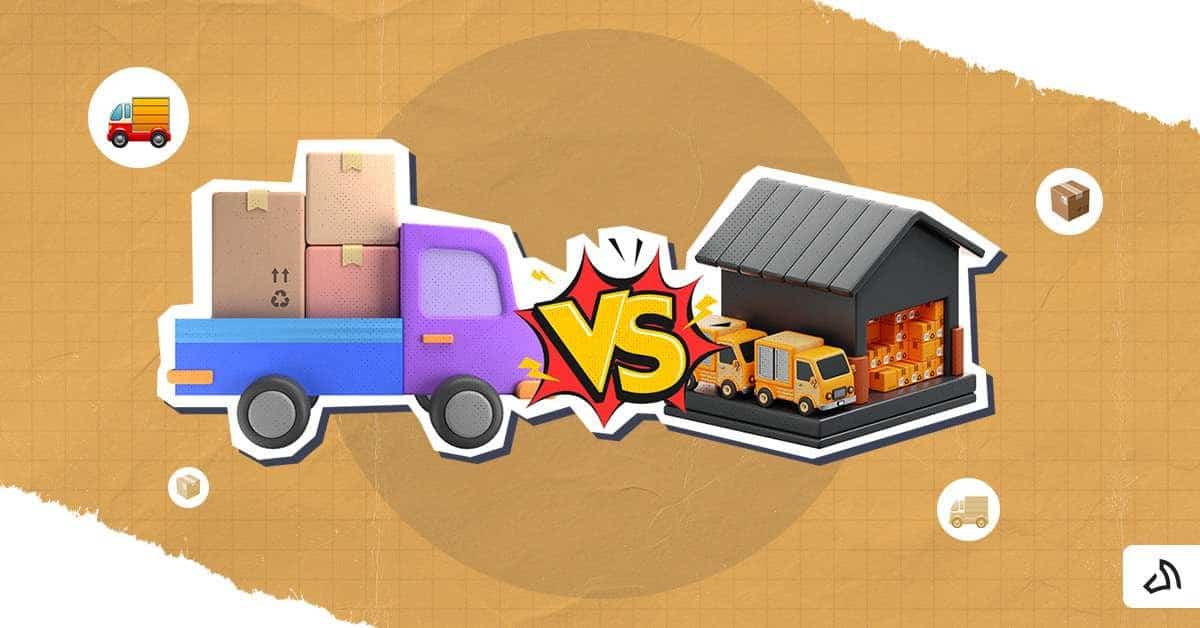
Distribution centers and fulfillment centers not only differ in their focus. You can also notice some distinctions in terms of the services they offer.
Below are the detailed features of the two centers:
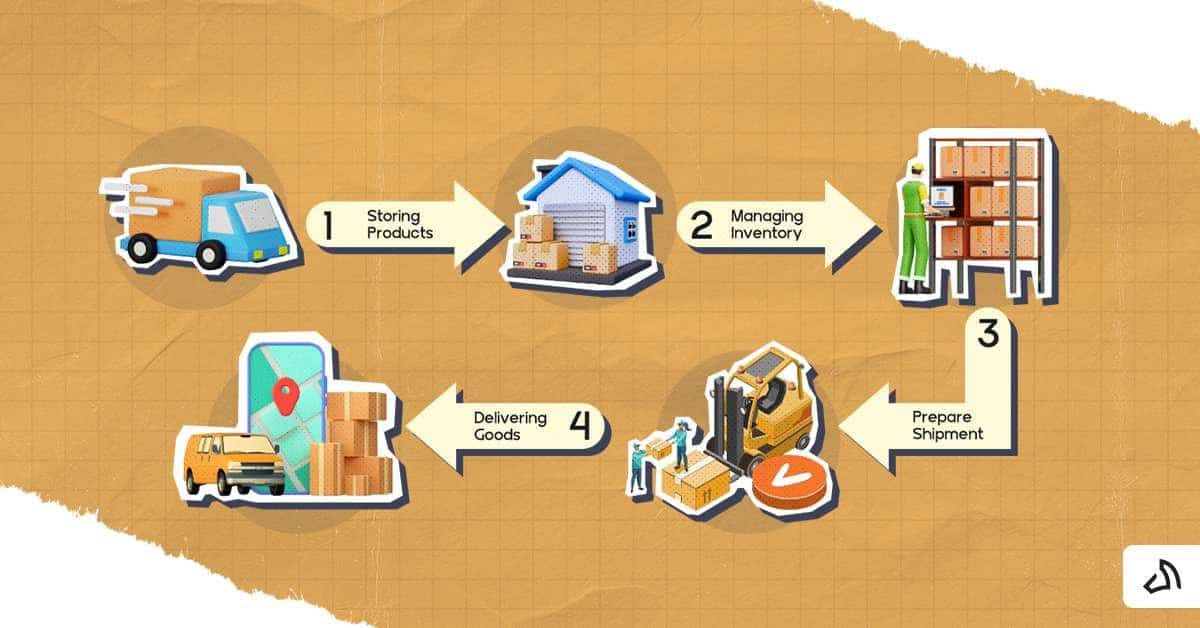
Distribution centers can handle volume and logistics for other businesses, retail stores, and wholesalers. Here are their services:
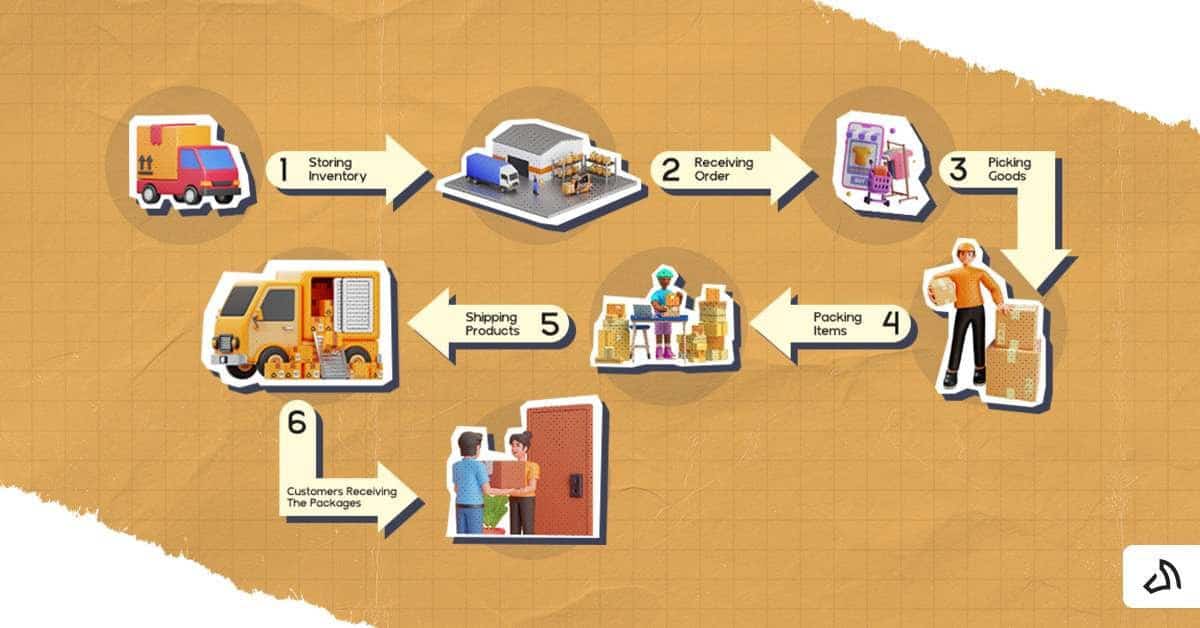
Fulfillment centers handle the complexity of thousands of unique, individual orders. Here are their services:
The table below makes understanding the difference between the two services easier.
| Service Category | Distribution Center | Fulfillment Center |
| Primary Unit | Pallets and Master Cases | Individual Items |
| Speed Goal | Constant, predictable flow | Same-day or Next-day shipping |
| Storage Term | Long-term storage (Strategic Buffer) | Short-term storage (High Turnover) |
| Customer Service | Rarely interacts with end-users | Managers tracking and returns for users |
| Technology | Freight/LTL Tracking | Real-time eCommerce integrations |
As noted earlier, choosing between a fulfillment and a distribution center depends on what the eCommerce retailer needs. To help you decide, here are the pros and cons of each type of warehouse:
Aside from their highlighted large storage capacity earlier, here are the pros and cons of DCs:
| Features | Pros | Cons |
| Versatility | Distribution centers can handle many products, making them useful for various businesses. | May struggle with fragile or temperature-controlled shipping as they're built for bulk handling. |
| Cost | Distribution centers can save businesses money by shipping in larger quantities. | Requires expensive initial investments in large facilities and advanced equipment. |
| Flexibility | They are flexible in managing inventory, shipping, and distribution to meet the company's needs. | Managing many routes and schedules limits quick operational changes. |
| Greater Control | Businesses maintain greater control over inventory, shipping methods, and customer service. | Delays can happen if the distribution process isn't efficient. |
| Strategic Location | Often located in strategic locations to reduce shipping time and costs. | The wrong location can lead to higher costs and slower deliveries. |
While the detailed order processing of FCs was mentioned earlier, you also need to know its pros and cons:
| Features | Pros | Cons |
| Specialization | Fulfillment centers specialize in logistics, handling shipping, storage, and inventory management efficiently. | Businesses may lose some control over the order. |
| Technology Integration | It uses advanced technology to track inventory, automate tasks, and analyze data. | Reliance on technology limits control, as any technical issues can disrupt operations. |
| Costs | Outsourcing fulfillment offers savings on shipping, warehousing, and labour, benefiting Canadian domestic shipping. | Higher operational costs compared to in-house fulfillment. |
| Customer Satisfaction | Faster shipping and better inventory management make customers happier. | It might not accommodate custom processes or special requests. |
| Location | Can be strategically placed closer to customer populations, reducing shipping times and delivery costs. | Fulfillment centers far from customers increase shipping time and cost. |
Distribution and fulfillment centers play significant roles in the supply chain. These two facilities make it easier to store, manage, and deliver products. While their processes can differ slightly, they ensure goods move smoothly from storage to customers.
With the help of warehouse management systems, businesses not only track real-time inventory. They can also reduce human errors and speed up order processing.
These centers also help businesses meet customer expectations by delivering orders faster and more accurately. By placing products closer to customers, companies can shorten delivery times and respond quickly to demand. Overall, fulfillment and distribution centers create a more efficient and flexible supply chain.
The fulfillment and distribution center plays a crucial role in the supply chain. While they may seem similar, finding the right e-commerce shipping partner can help meet your business needs.
Stallion is a Canadian 3PL provider that helps e-commerce sellers save on shipping, whether in Canada, to the US, or internationally.
Here's what we offer:
In short: Stallion helps online sellers save money, automate shipping, manage inventory, and scale their business more easily.
So, what are you waiting for? Let us be your fulfillment partner!

Jose is Stallion's Senior Business Analyst. He helps improve the company’s shipping processes, works closely with delivery partners, and looks at shipping data to find the best prices for our customers. Outside of work, Jose has a passion for running, regularly completing 5k and 10k runs, with the goal of running a full marathon in the near future.
Can our fellow Torontonians relate?
-
#smallbusiness #business #entrepreneur #socialmedia #shipping #ecommerce #canadianecommerce #shopify #poshmark #b2b #saas #etsy #ebay #canada #canadiansmallbusiness #shoplocalcanada #entrepreneur
#toronto

Here’s your quick hassle free shipping from 🇨🇦 to 🇺🇸 as a business owner!
-
Any questions?! Leave them 👇🏻 and save this video so you don’t forget!
-
#smallbusiness #business #entrepreneur #socialmedia #shipping #ecommerce #canadianecommerce #shopify #poshmark #b2b #saas #etsy #ebay #canada #canadiansmallbusiness #shoplocalcanada #entrepreneur
Meet @drinkbenny a 🇨🇦 female founded energy drink brand! Instead of focusing on their products, they’re taking a unique approach by hosting in person events in different Canadian cities to offer an experience for their community 🧡
-
What are your thoughts on in person events? 💭
-
#smallbusiness #business #entrepreneur #socialmedia #shipping #ecommerce #canadianecommerce #shopify #poshmark #b2b #saas #etsy #ebay #canada #canadiansmallbusiness #shoplocalcanada #entrepreneur
Do you know the difference between DDU and DDP when shipping internationally 🌏 ?
-
Questions? Leave them below! 👇🏻
-
#smallbusiness #business #entrepreneur #socialmedia #shipping #ecommerce #canadianecommerce #shopify #poshmark #b2b #saas #etsy #ebay #canada #canadiansmallbusiness #shoplocalcanada #entrepreneur
Here’s a quick hack to save time from choosing multiple postage options
↪️ Turn on the lowest postage rate automation to save you time!
-
Questions? Leave them below! 👇🏻
-
#smallbusiness #business #entrepreneur #socialmedia #shipping #ecommerce #canadianecommerce #shopify #poshmark #b2b #saas #etsy #ebay #canada #canadiansmallbusiness #shoplocalcanada #entrepreneur