Shipping to Canada
Save up to 50%

Shipping to the U.S.
Save up to 75%

Shipping Internationally
Save up to 85%

Same Day Delivery
Across the GTA

Returns
Lowest rate on the market
It doesn't matter whether you ship 5 kilometres away to a customer's door or cross the country to a fulfillment centre. Every online order will eventually ride on a truck. But which types of trucks do your packages ride on?
This guide breaks down the main truck categories used in eCommerce logistics. We will also explain how they connect to LTL and FTL shipping and cover what to consider when choosing the right option for your store.
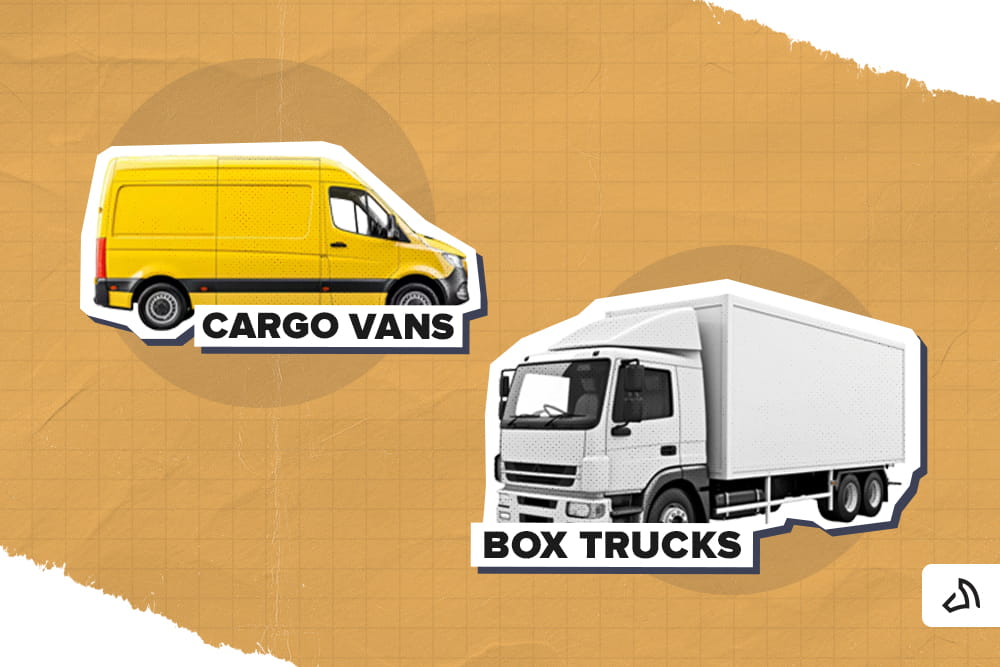
Final-mile delivery is the last step in the shipping journey. The trucks used during this stage are better suited to frequent stops, tight turns, and smaller loads than to long highway hauls. Here are the truck types more suitable for this situation:
Cargo vans and/or sprinter vans are light-duty trucks and might be the smallest vehicles used in eCommerce logistics. Because of their sizes, they typically handle the final leg of a delivery route.
They can make door-to-door stops and enter narrower alleys. Thus, these trucks are more practical for sellers and carriers focused on quick local fulfillment rather than long-haul freight.
Special Features:
Box trucks (also called straight trucks) are a type of medium-duty truck that sits a step up in size from cargo vans. Best suited for hauling heavier and bulkier loads than a van can manage on its own. They fill the gap between local delivery vehicles and full-trailer freight.
Special Features:
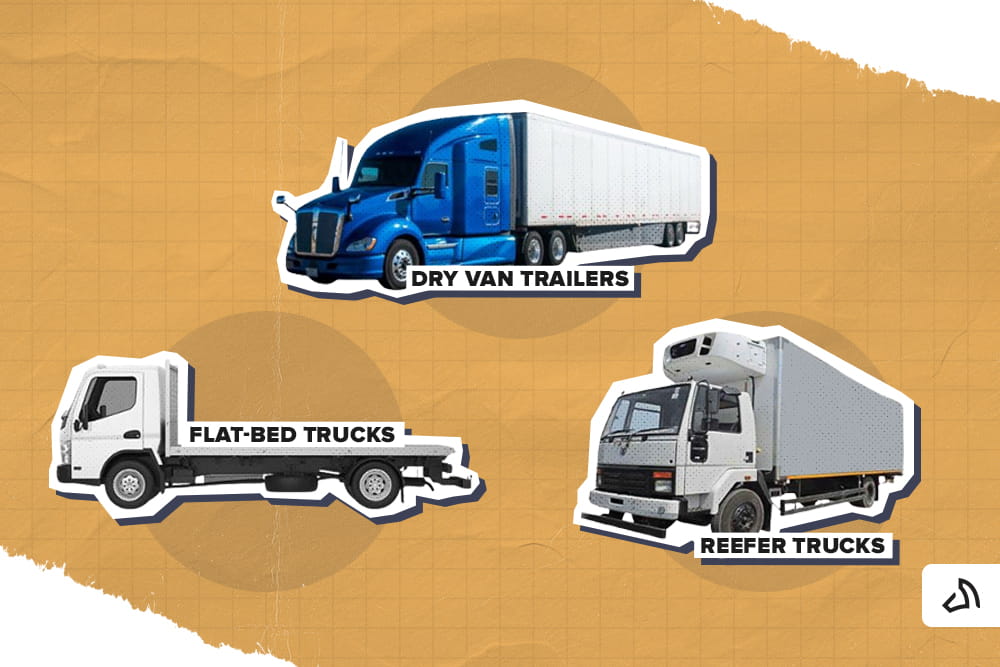
If you're shipping bulk inventories or long distances, it's ideal to move them via larger trailers pulled by tractor units. Here are the trucks suitable for highway travel and can carry significantly more load than final-mile vehicles:
Dry van trailers are a type of semi-trailer and the default choice for most ground shipments. Designed for general cargo that doesn't require special handling, these trailers are the ones sellers are most likely to encounter when booking bulk transport.
Special Features:
Like dry vans, reefer trucks are also semi-trailers. However, these semi-trailer trucks are purpose-built for shipments that can't tolerate temperature swings during transit. Reefer is short for "refrigerated trucks," and it's perfect for online sellers whose products depend on consistent handling conditions from pickup to delivery.
Special Features:
Similarly, flatbed trucks are also semi-trailers. But you'll notice a slightly different approach to hauling shipments. Rather than enclosing a shipment, these heavy-duty trucks leave the haul exposed. This opens up options for deliveries that wouldn't otherwise fit inside a standard trailer.
Special Features:
| Truck Type | Typical Capacity | Best For | Key Feature |
| Cargo/Sprinter Van | Up to ~4,000 lbs | Local, same-day deliveries | Compact and easy to drive around |
| Box Truck | ~10,000-15,000 lbs | Regional deliveries, bulky items | Enclosed load space on a single frame |
| Dry Van Trailer | Up to ~45,000 lbs | General palletized or boxed goods | Fully enclosed, weather protection |
| Reefer Trailer | Up to ~45,000 lbs | Perishables, temperature-sensitive goods | Climate-controlled load space |
| Flatbed Truck | Varies by load | Oversized or irregularly shaped items | Open bed, no height restrictions |
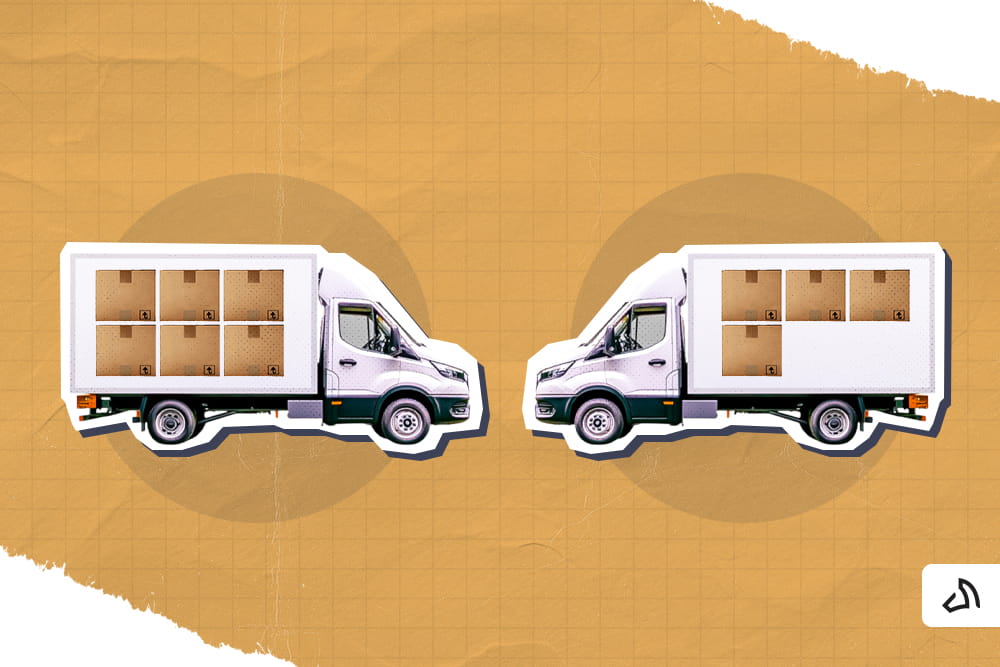
The list of truck types used for a shipment is closely tied to whether that shipment ships as LTL or FTL. But what are these terms?
Let's look at their differences so you can choose the right shipping mode for your order volume:
Less-Than-Truckload, or LTL, is a combination of multiple smaller shipments from different shippers onto a single trailer.
Simply put, you are combining your deliveries with other sellers' deliveries in a single truck.
Pro:
It's a cost-effective option for sellers who don't have enough shipments to fill an entire truck.
Con:
The vehicle makes multiple stops to load and unload different shipments. Therefore, LTL tend to take longer to arrive than a dedicated truck would.
Full Truckload (FTL) shipping means a single shipment occupies the entire truck. It doesn't matter whether it physically fills all the space.
Pro:
FTL is generally faster since the truck travels directly from pickup to destination. It doesn't have to stop for other loads. And it tends to make sense for sellers moving large volumes of inventory, such as restocking a fulfillment centre.
Con:
It is more expensive for sellers with smaller-volume shipments because they have to pay for the entire truck space.
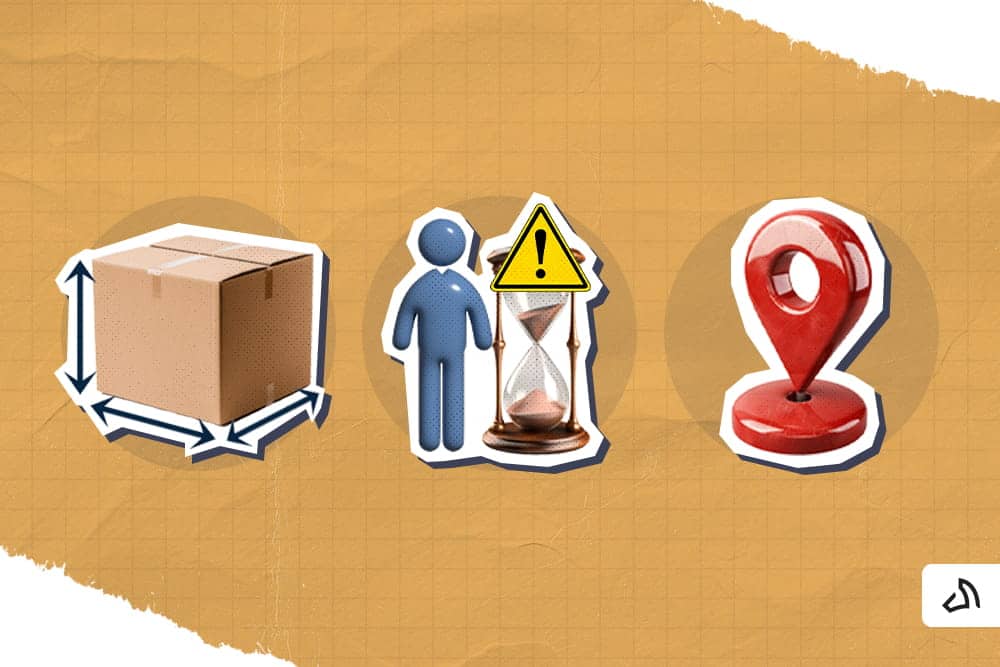
As you can see, there are plenty of types of trucks in logistics. But one thing to remember: selecting the right truck isn't just about size. Here are a few practical factors to determine what will actually work for your shipment:
The amount and weight of your inventory can be the starting point when choosing the right type of truck. For example, if you're shipping a smaller volume. Then, it may typically require a sprinter van.
But let's say you have larger inventory restocks. In this case, the shipments may need a sprinter van or a much bigger truck. Matching vehicle capacity to your actual shipment size helps you avoid paying for space you don't need.
Not every pickup or delivery location can accommodate every truck classification. There are many elements you have to consider, such as:
All of these factors affect which trucks can access a site. Sellers shipping to or from residential addresses or smaller retail locations need to account for these limitations when booking freight.
There's no one-size-fits-all rule when it comes to destinations. Some places are more lenient than others. Other destinations have more specific requirements. So the rule of thumb: always check before shipping to avoid issues.
Some rules to look at before shipping are:
Understanding these rules ahead of time helps prevent delays and unexpected accessorial fees.
Here are answers to some common questions online sellers have about different types of trucks, shipping requirements, and delivery costs:
You will need a liftgate when a location doesn't have a loading dock that matches the truck bed height. So let's say your pickup or delivery site is a residential address, retail storefront, or a small business without dock access. It likely needs a liftgate to load or unload packages at ground level safely.
Absolutely. Using a standard pickup truck is a highly popular, cost-effective way for Canadian online sellers to self-haul bulk packages to a Stallion branch or a local carrier hub. However, keep in mind that most hubs and fulfillment centres have specific safety protocols. Always ensure your goods are securely tarped and strapped to protect them from weather and shifting during transit.
In some cases, there are still additional charges on top of what you pay for pickup and delivery. These are what we call accessorial fees. They can include various factors, such as liftgate use, residential or inside delivery, or waiting time.
These fees can add up quickly for sellers who don't account for them. So, it helps to review your shipping quotes carefully and confirm what's included before booking.
They generally don't. Dump trucks and tow trucks are more suitable for construction hauling and vehicle recovery. They are not specifically made for carrying eCommerce shipments. So, they don't play a role in the regular shipping process. The exception is a rare roadside situation, such as a delivery truck breaking down, in which you might call a tow truck to move the vehicle.
You may not have the power to choose the type of truck for your shipments. Still, knowing and understanding them can help you handle your needs and the practical realities of your pickup and delivery locations.
Whether you're sending a handful of parcels through final-mile delivery or moving a full trailer of restock inventory, matching the truck to the shipment helps keep your logistics running smoothly and your costs predictable.
Stallion gives Canadian online sellers the tools to manage shipping at every scale. Our services allow you to deliver single parcels and FTL shipments without juggling multiple carriers or guessing the costs.
What we offer:
Are you ready to ship with Stallion? Create an account with us today and start shipping smarter!

Candy Rada is a dedicated professional with tons of experience in content writing for the shipping industry. As a literature degree holder, she excels in creating engaging content with strategies that enhance brand visibility. She enjoys playing with her cats, reading dystopian books, and joining trivia games in her free time.
Can our fellow Torontonians relate?
-
#smallbusiness #business #entrepreneur #socialmedia #shipping #ecommerce #canadianecommerce #shopify #poshmark #b2b #saas #etsy #ebay #canada #canadiansmallbusiness #shoplocalcanada #entrepreneur
#toronto

Here’s your quick hassle free shipping from 🇨🇦 to 🇺🇸 as a business owner!
-
Any questions?! Leave them 👇🏻 and save this video so you don’t forget!
-
#smallbusiness #business #entrepreneur #socialmedia #shipping #ecommerce #canadianecommerce #shopify #poshmark #b2b #saas #etsy #ebay #canada #canadiansmallbusiness #shoplocalcanada #entrepreneur
Meet @drinkbenny a 🇨🇦 female founded energy drink brand! Instead of focusing on their products, they’re taking a unique approach by hosting in person events in different Canadian cities to offer an experience for their community 🧡
-
What are your thoughts on in person events? 💭
-
#smallbusiness #business #entrepreneur #socialmedia #shipping #ecommerce #canadianecommerce #shopify #poshmark #b2b #saas #etsy #ebay #canada #canadiansmallbusiness #shoplocalcanada #entrepreneur
Do you know the difference between DDU and DDP when shipping internationally 🌏 ?
-
Questions? Leave them below! 👇🏻
-
#smallbusiness #business #entrepreneur #socialmedia #shipping #ecommerce #canadianecommerce #shopify #poshmark #b2b #saas #etsy #ebay #canada #canadiansmallbusiness #shoplocalcanada #entrepreneur
Here’s a quick hack to save time from choosing multiple postage options
↪️ Turn on the lowest postage rate automation to save you time!
-
Questions? Leave them below! 👇🏻
-
#smallbusiness #business #entrepreneur #socialmedia #shipping #ecommerce #canadianecommerce #shopify #poshmark #b2b #saas #etsy #ebay #canada #canadiansmallbusiness #shoplocalcanada #entrepreneur